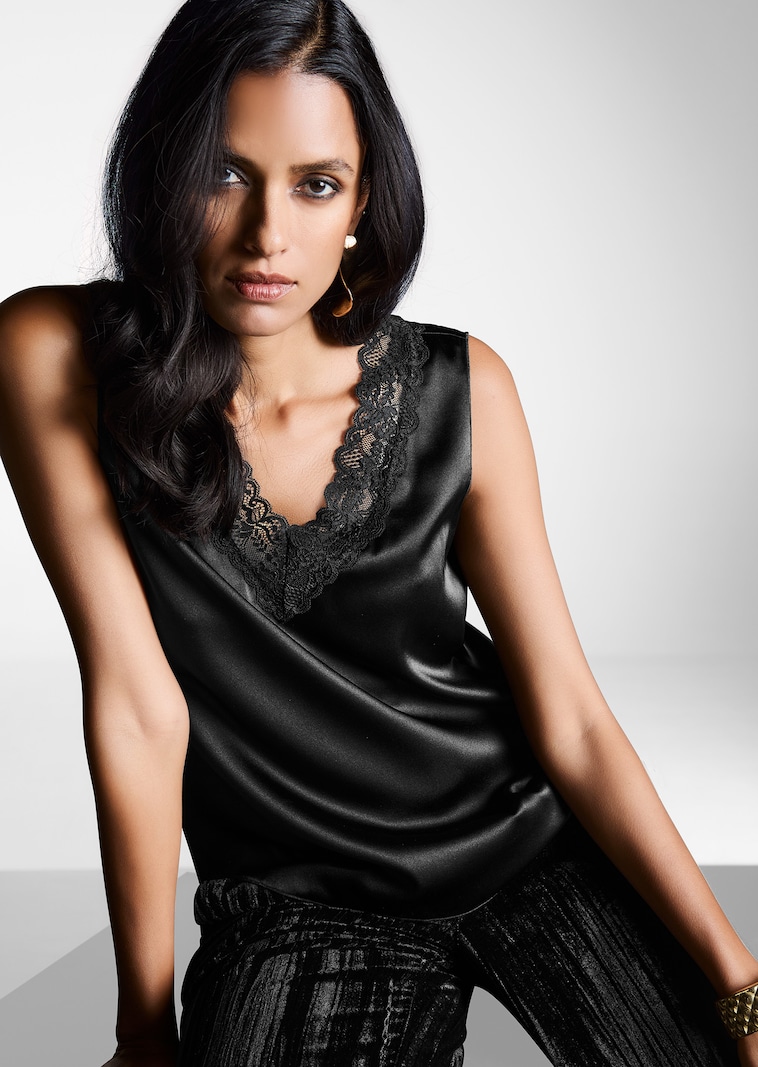
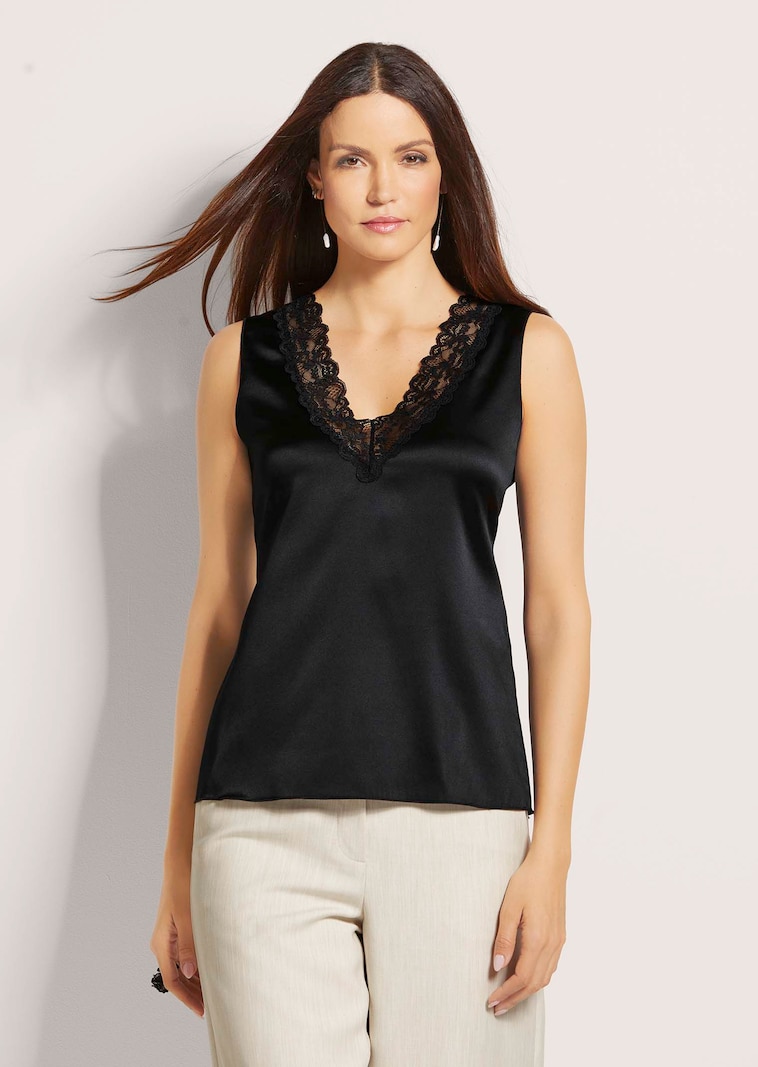
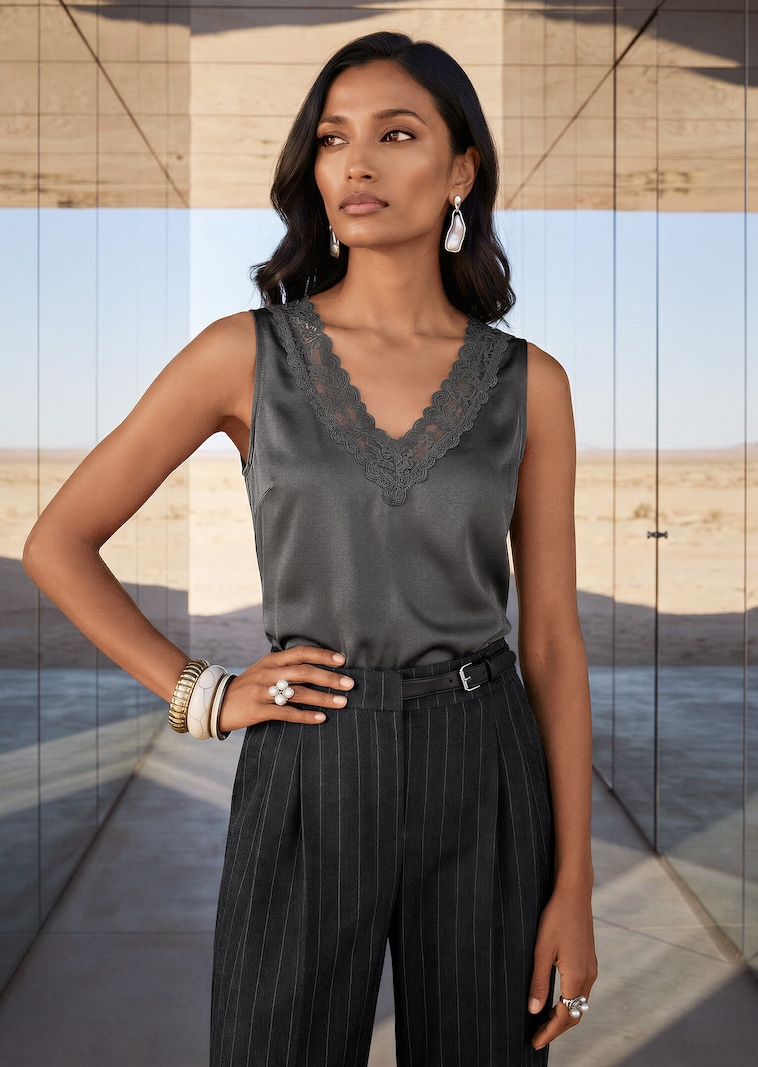
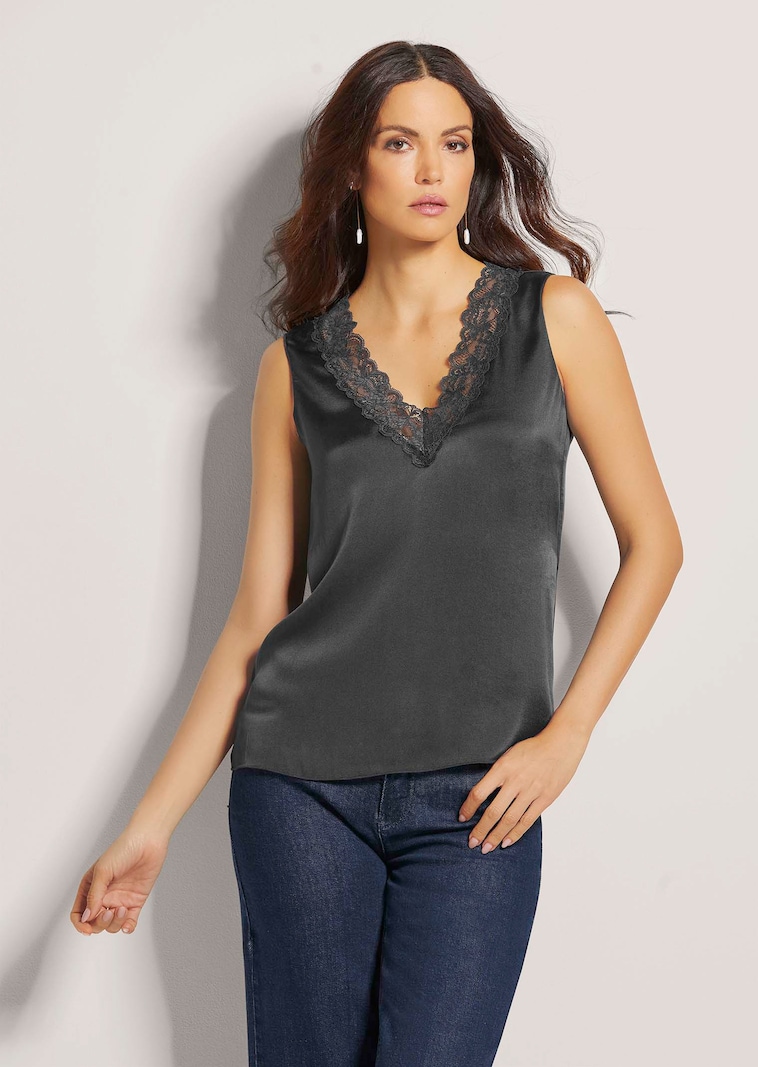
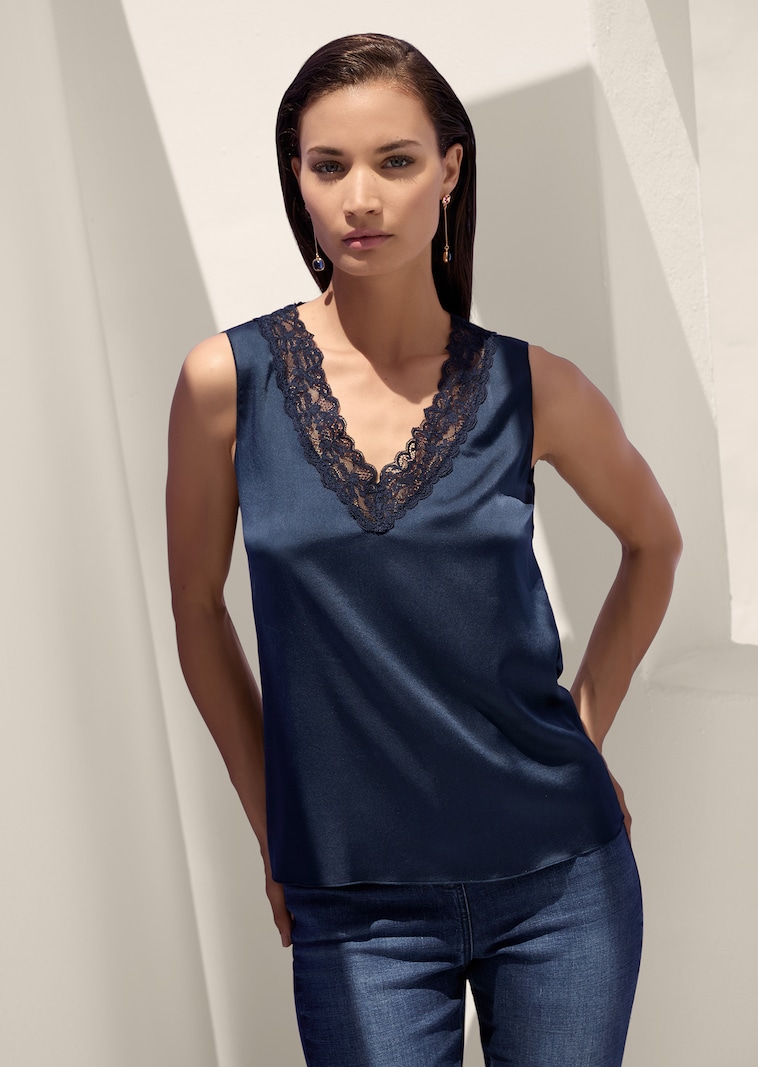
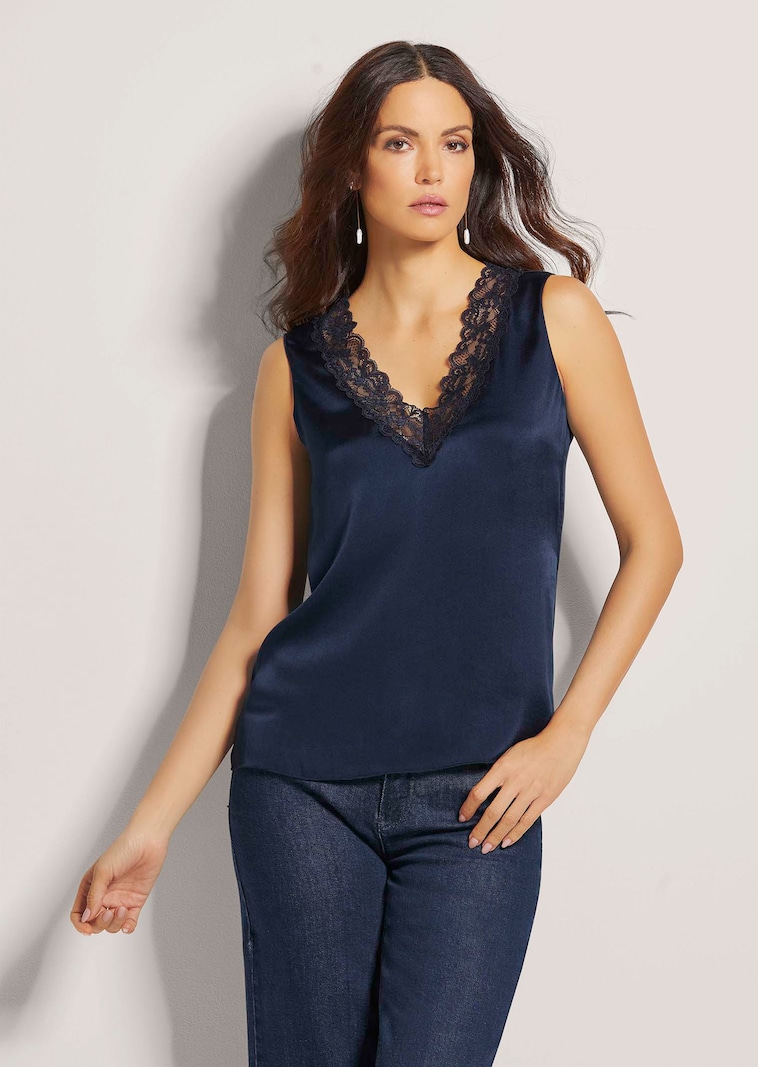
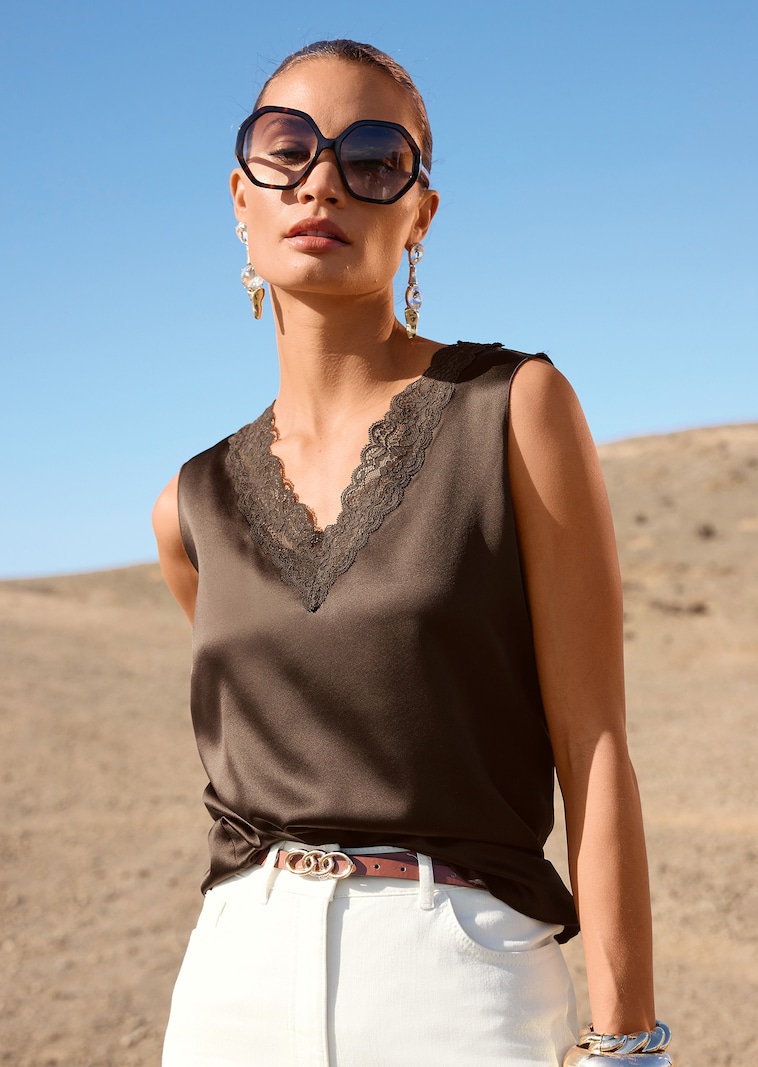
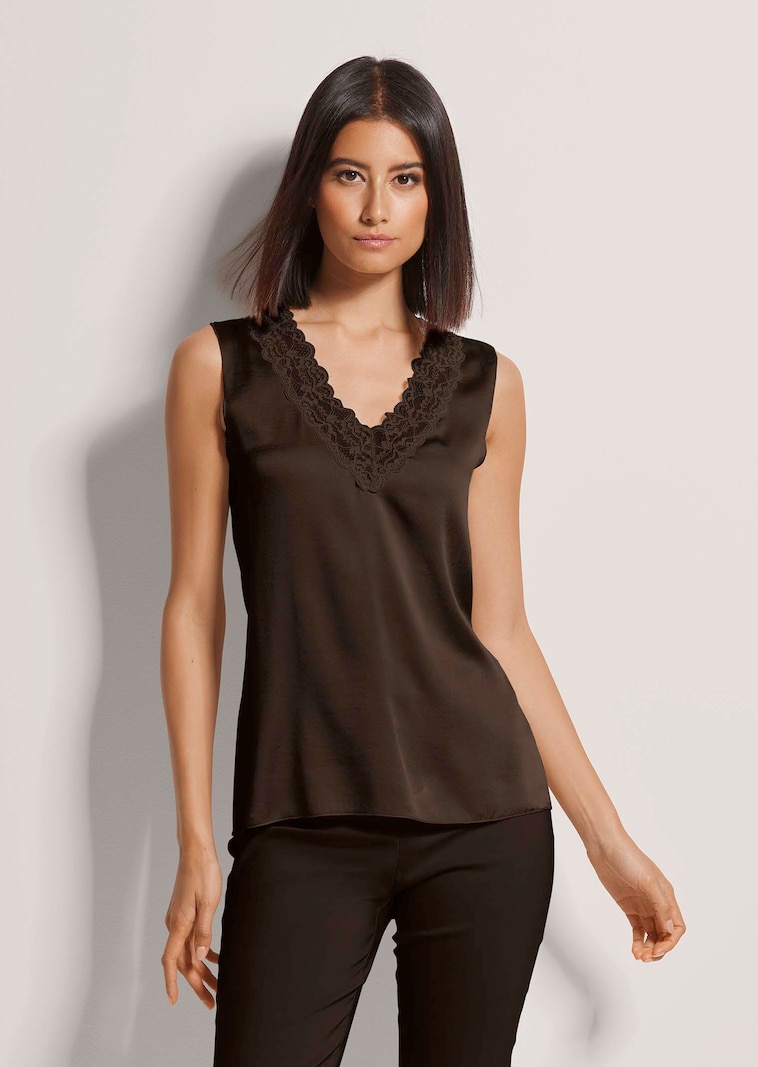
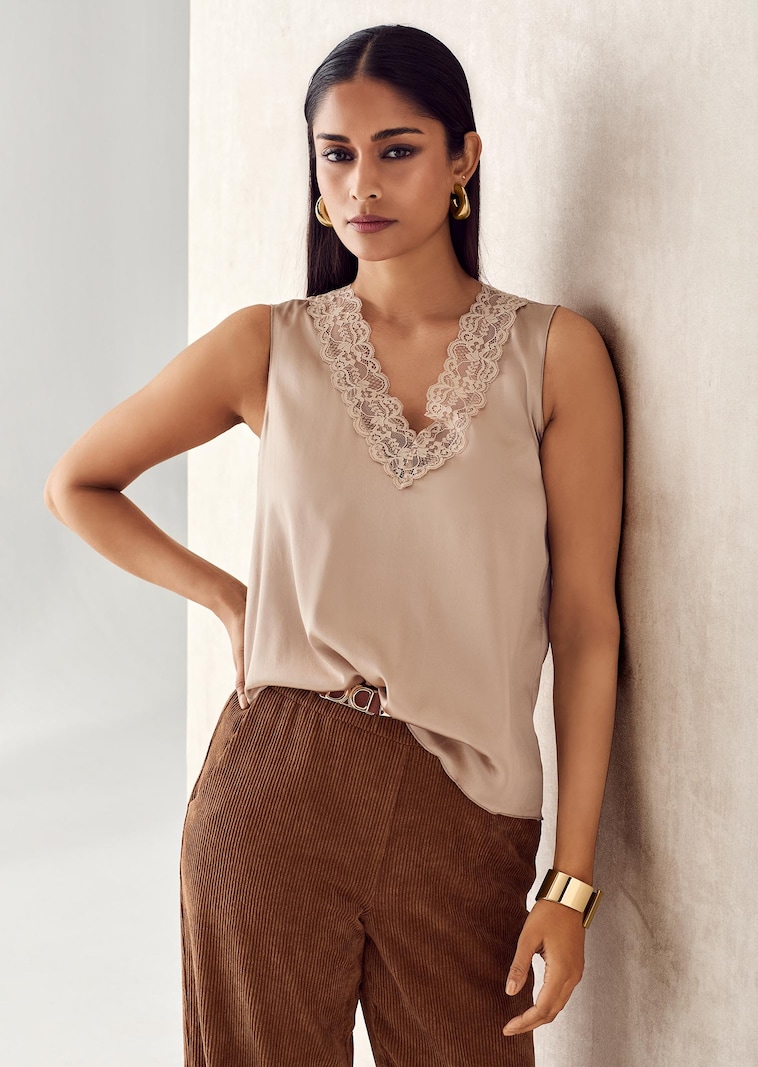
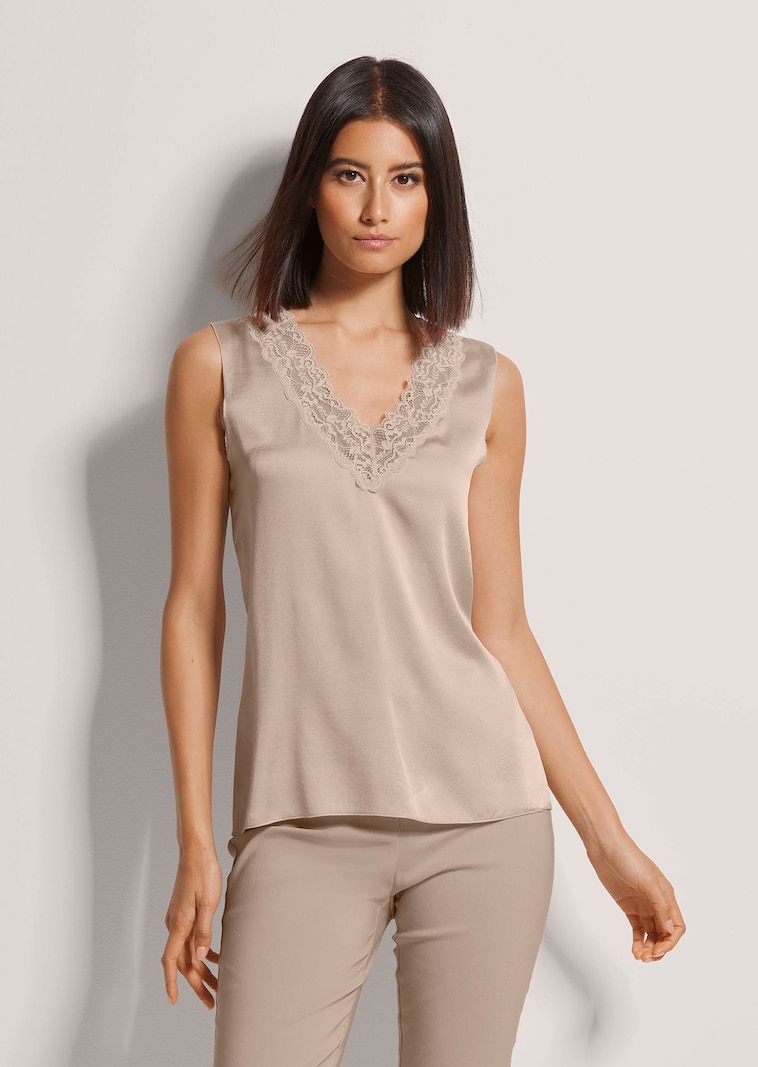
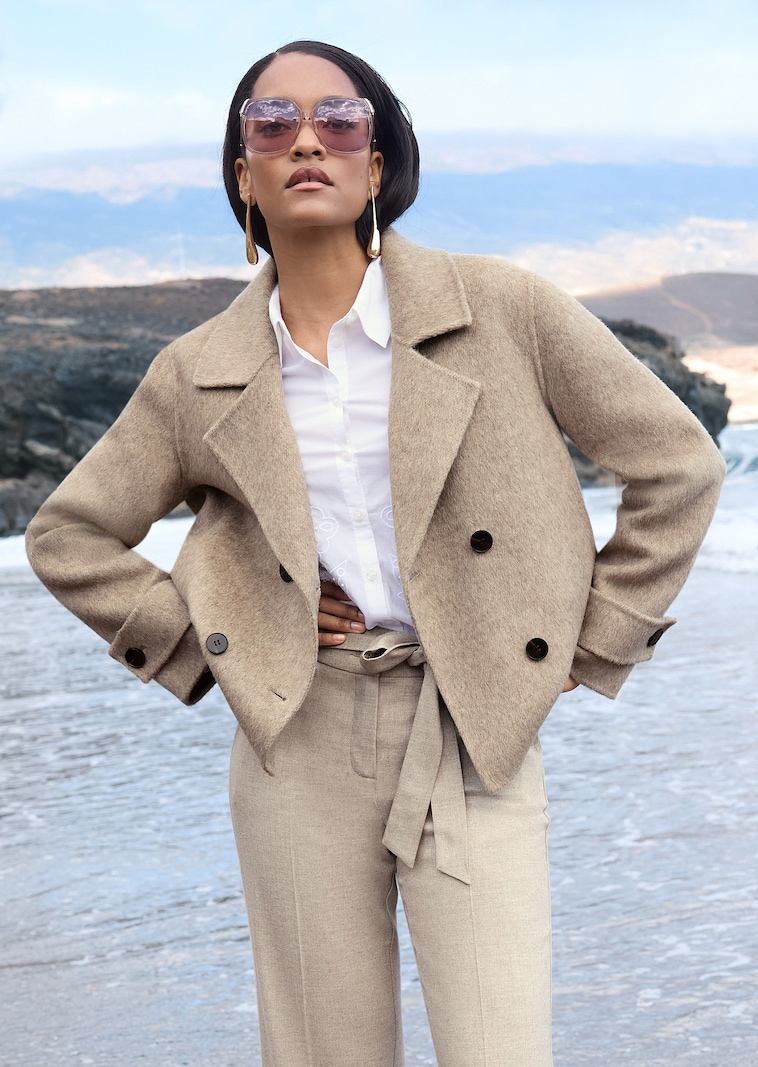
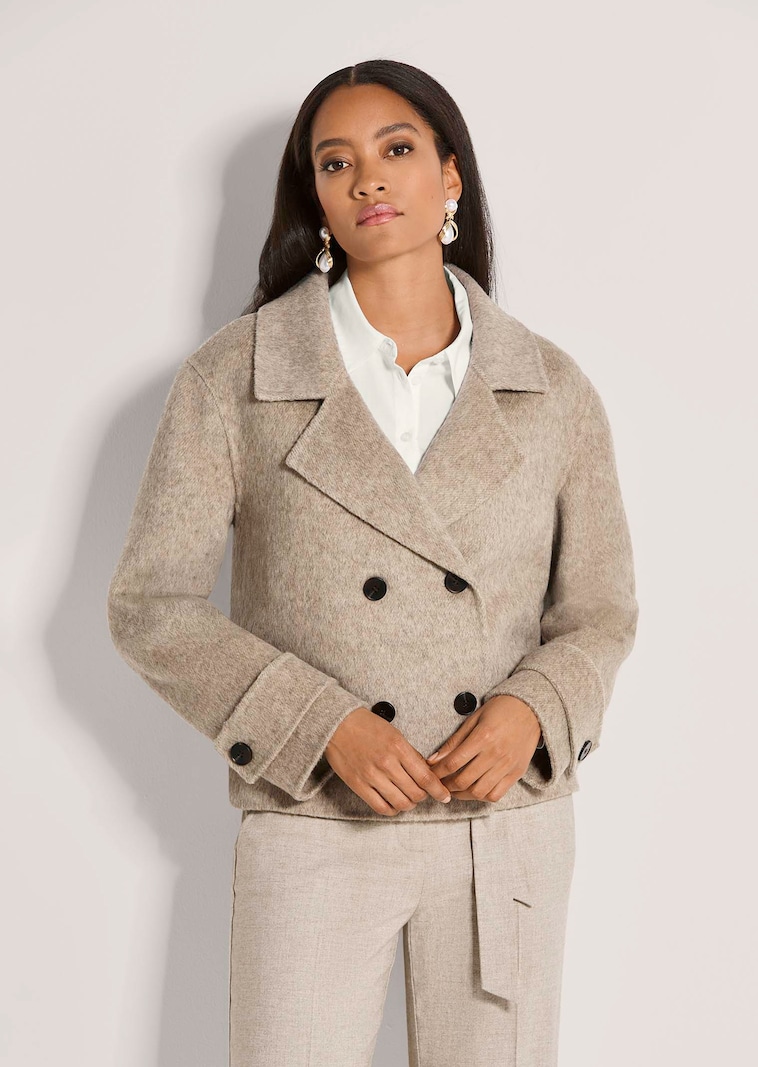
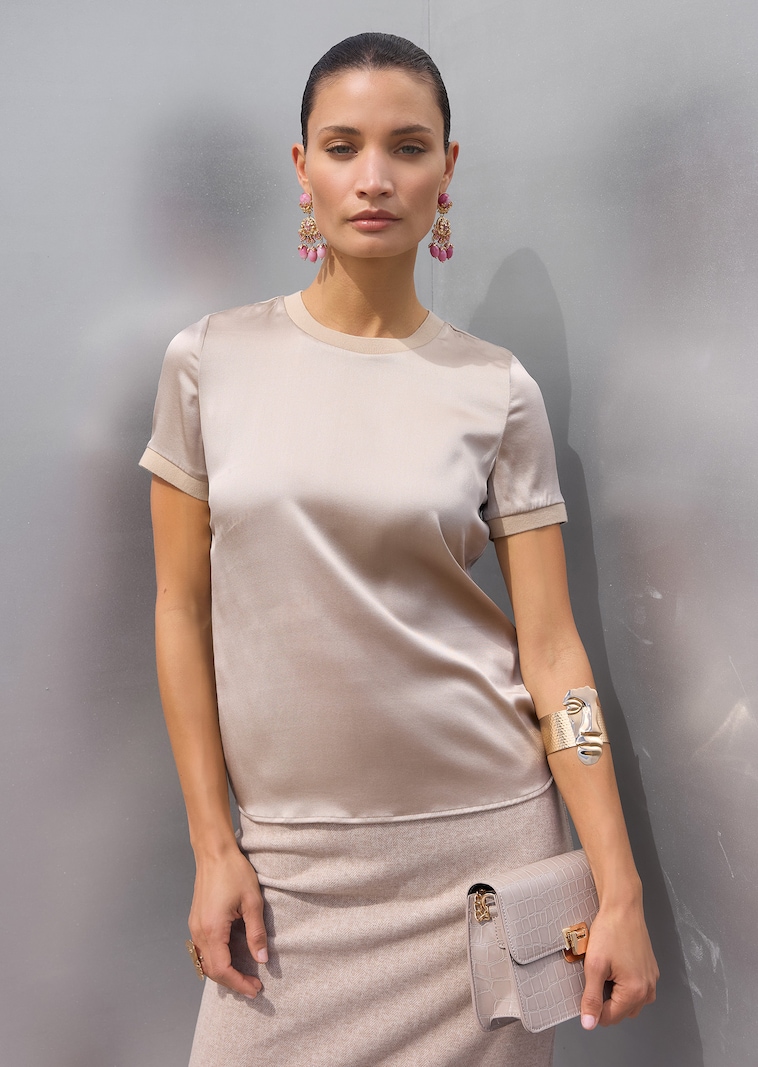
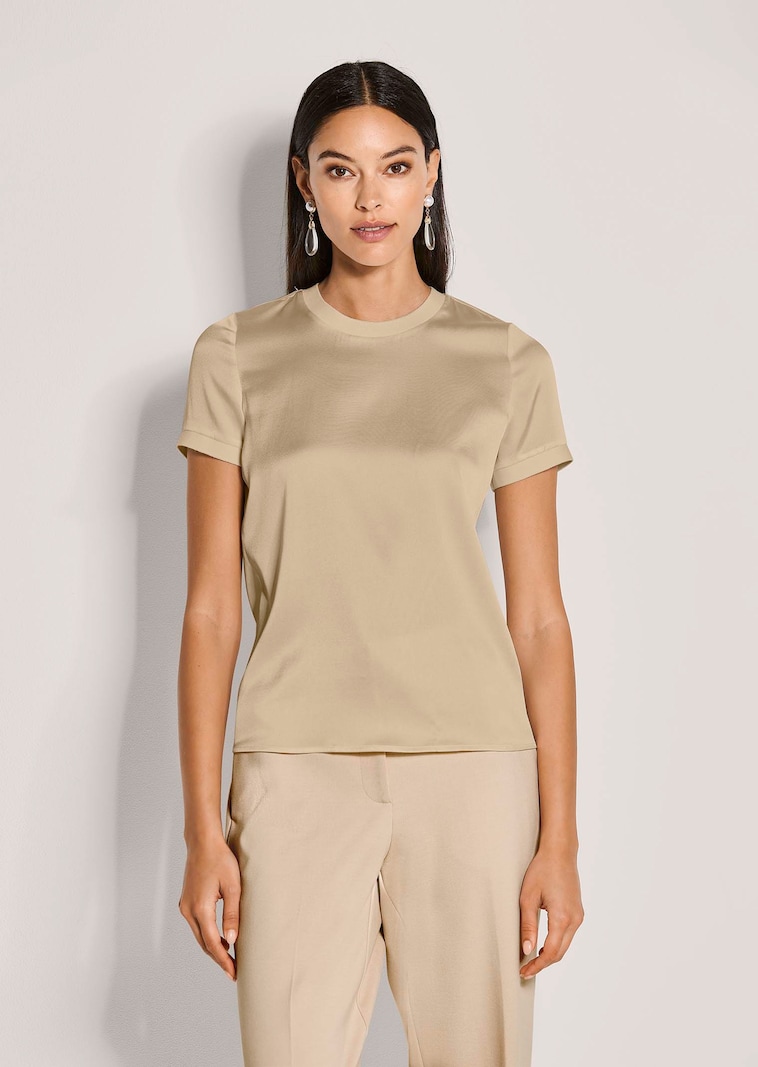
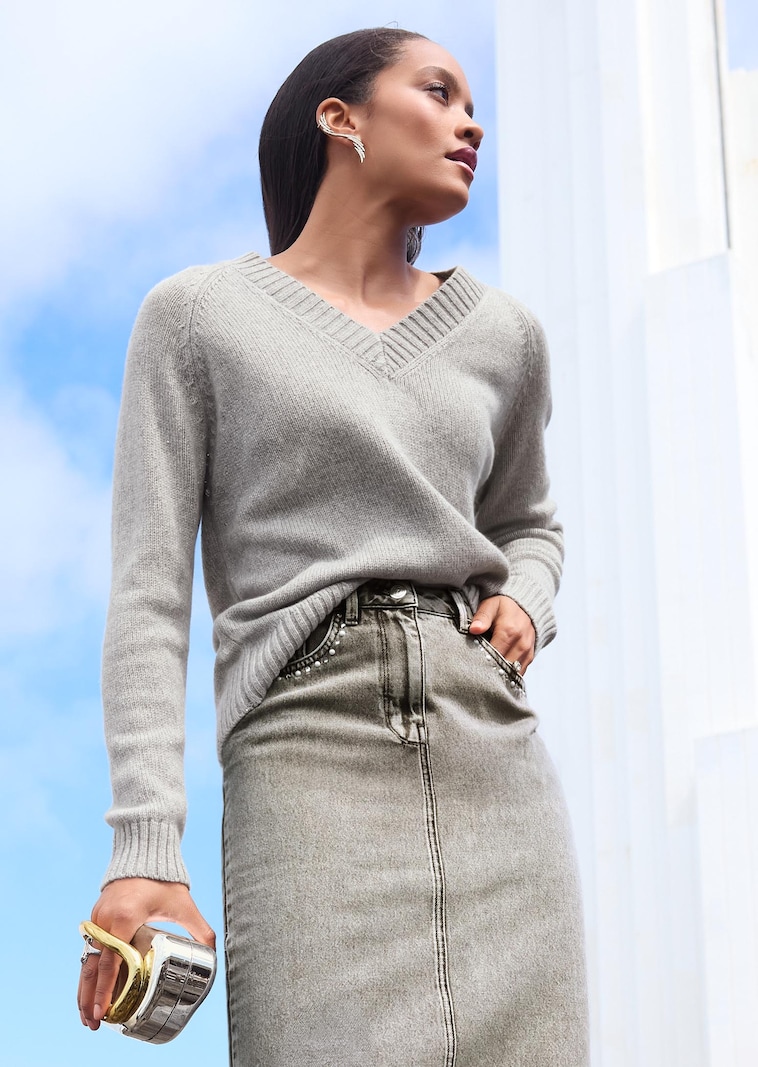
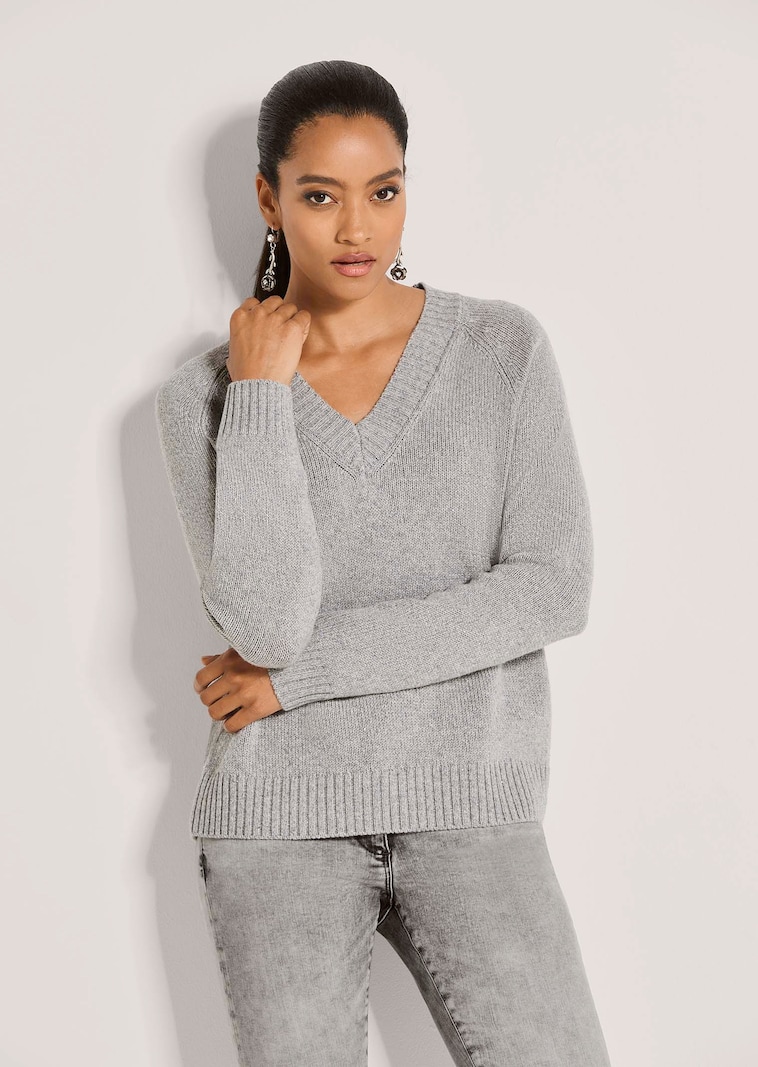
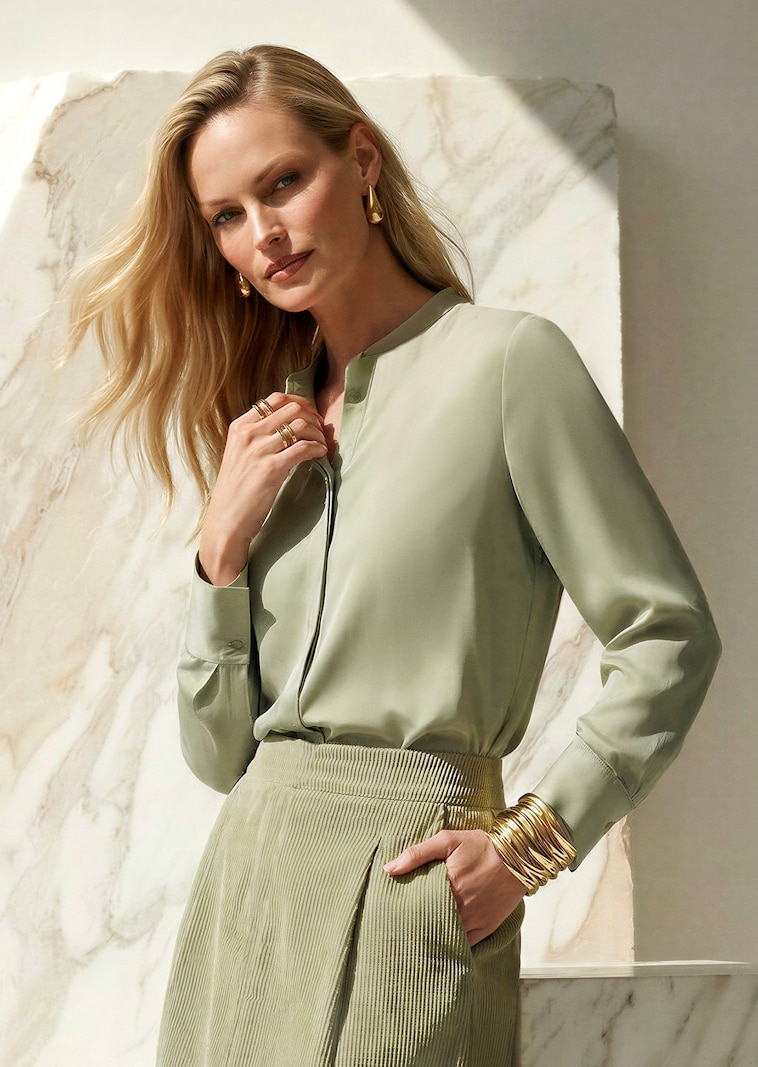
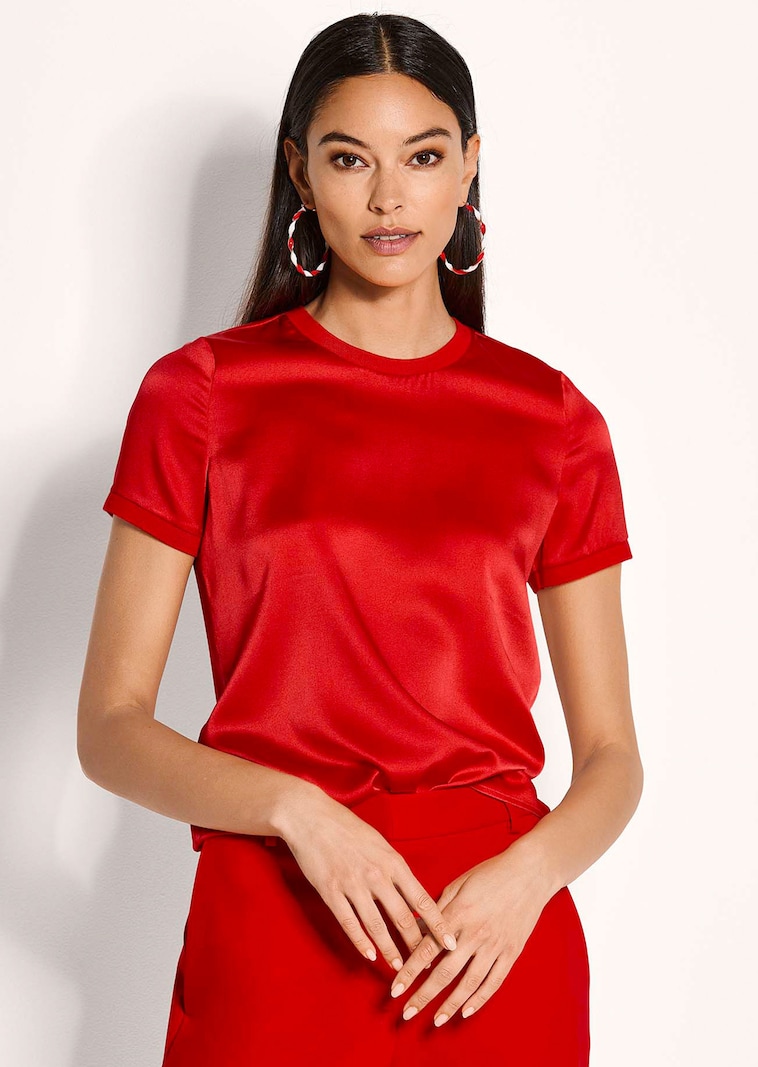
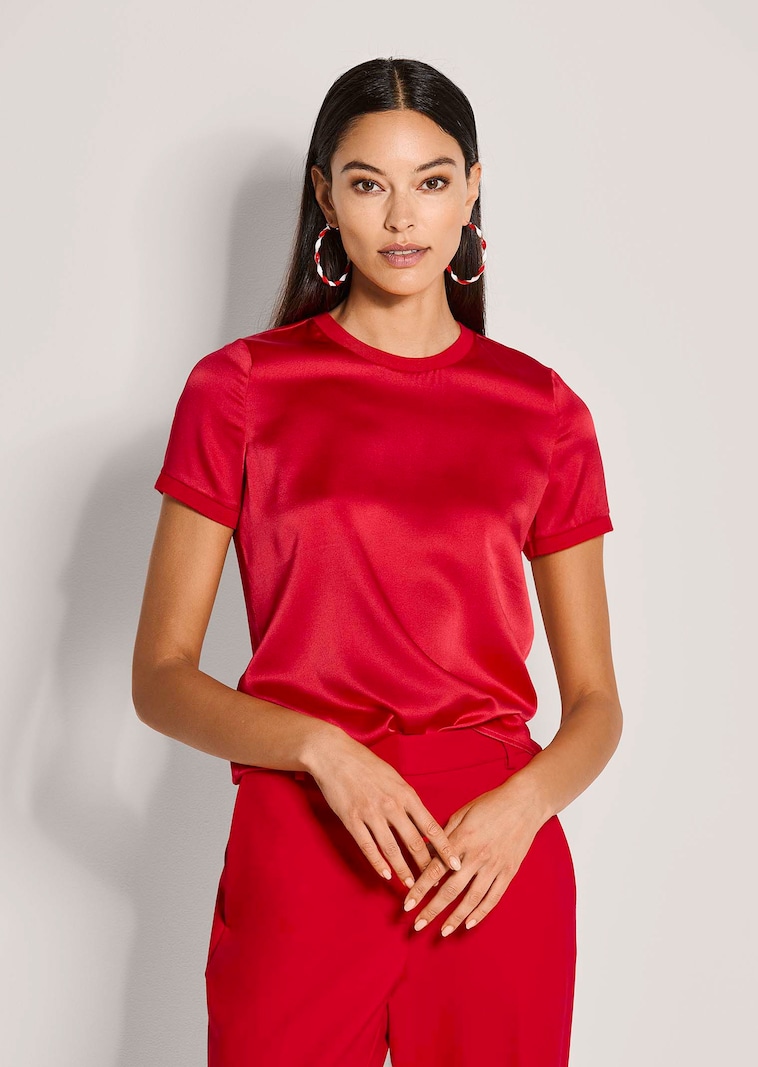
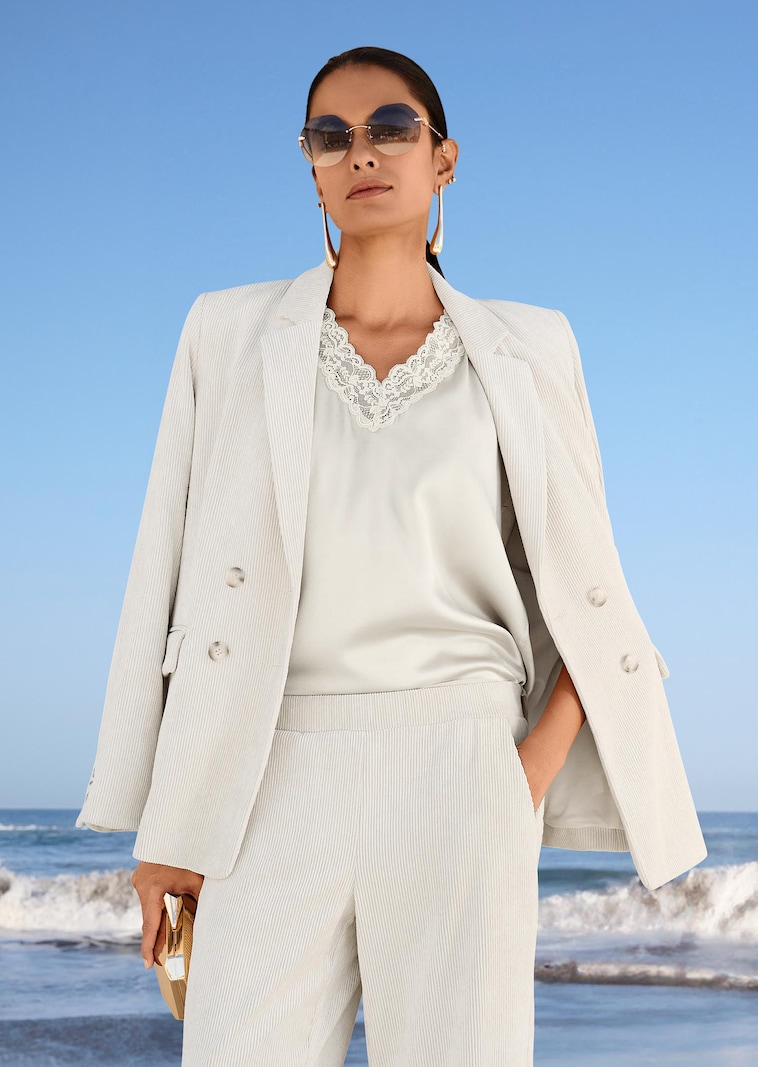
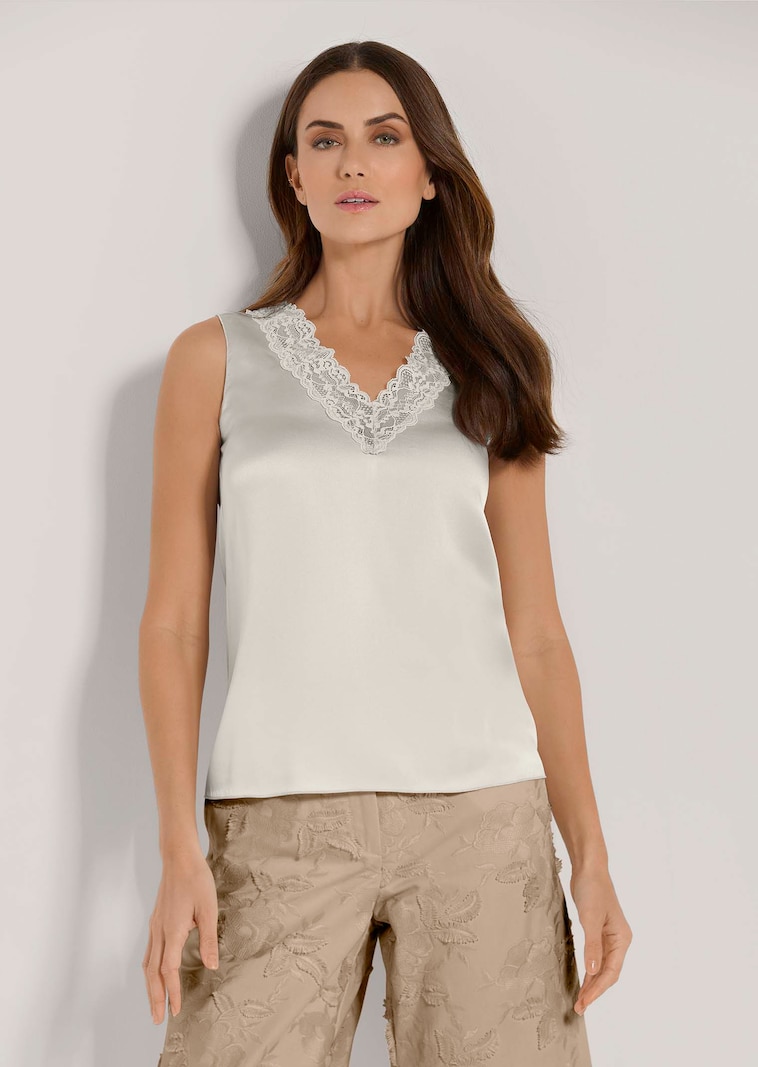


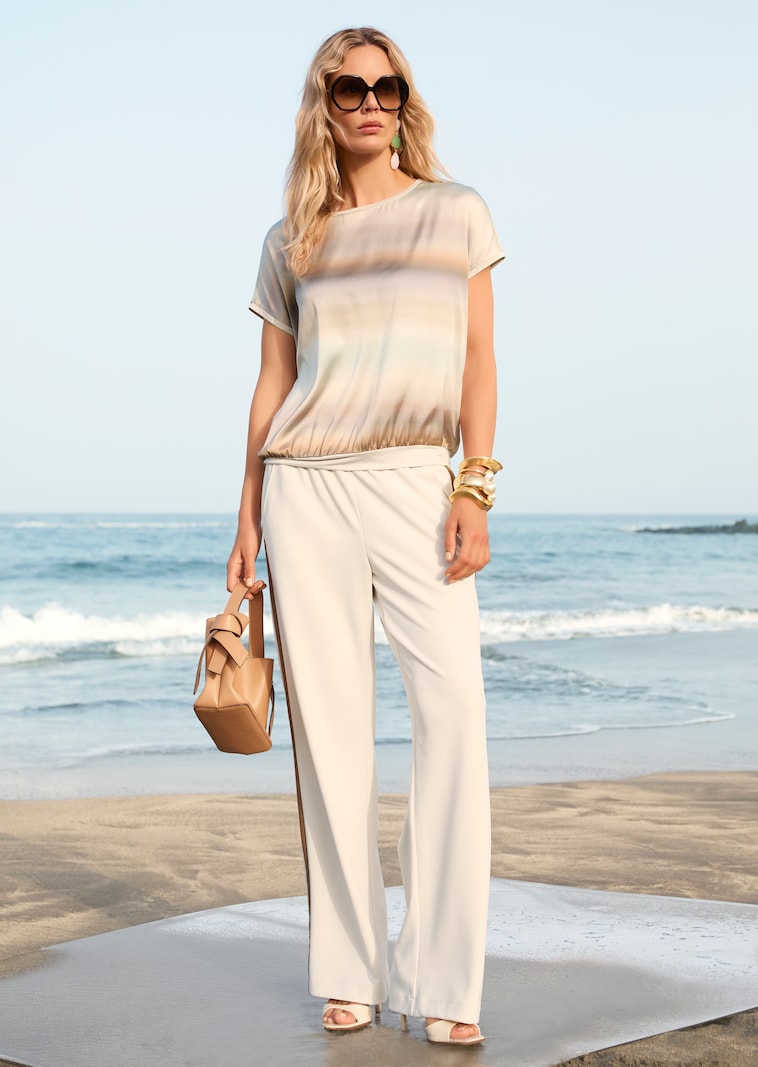
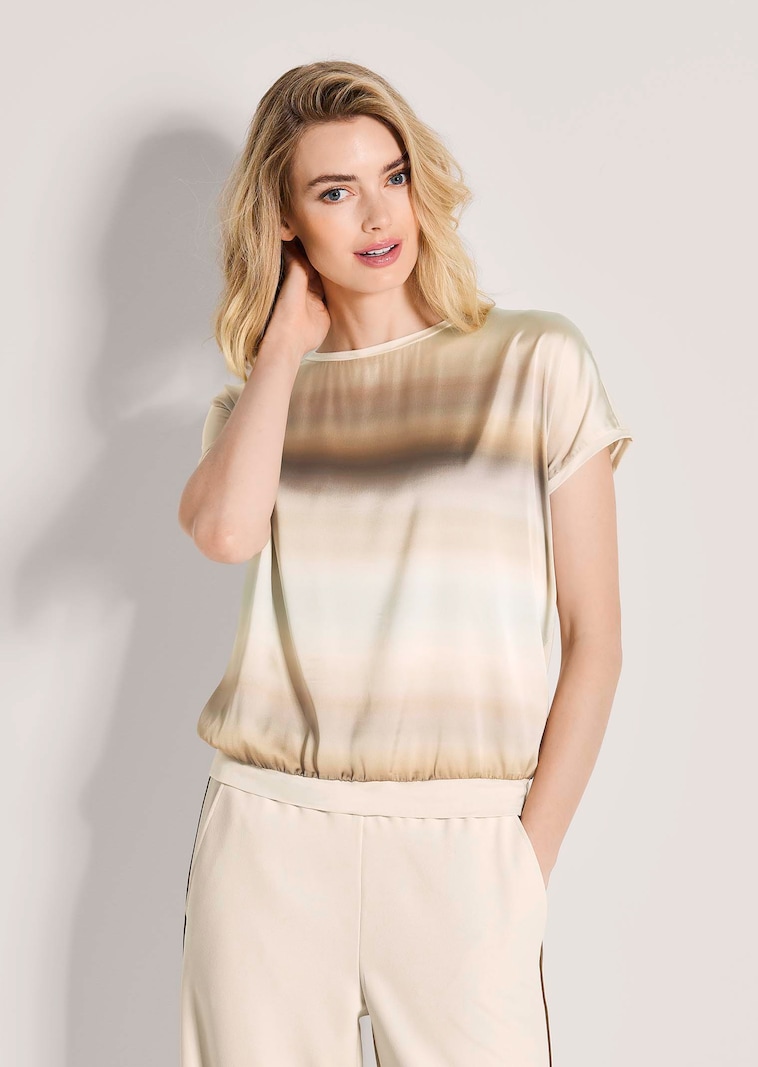
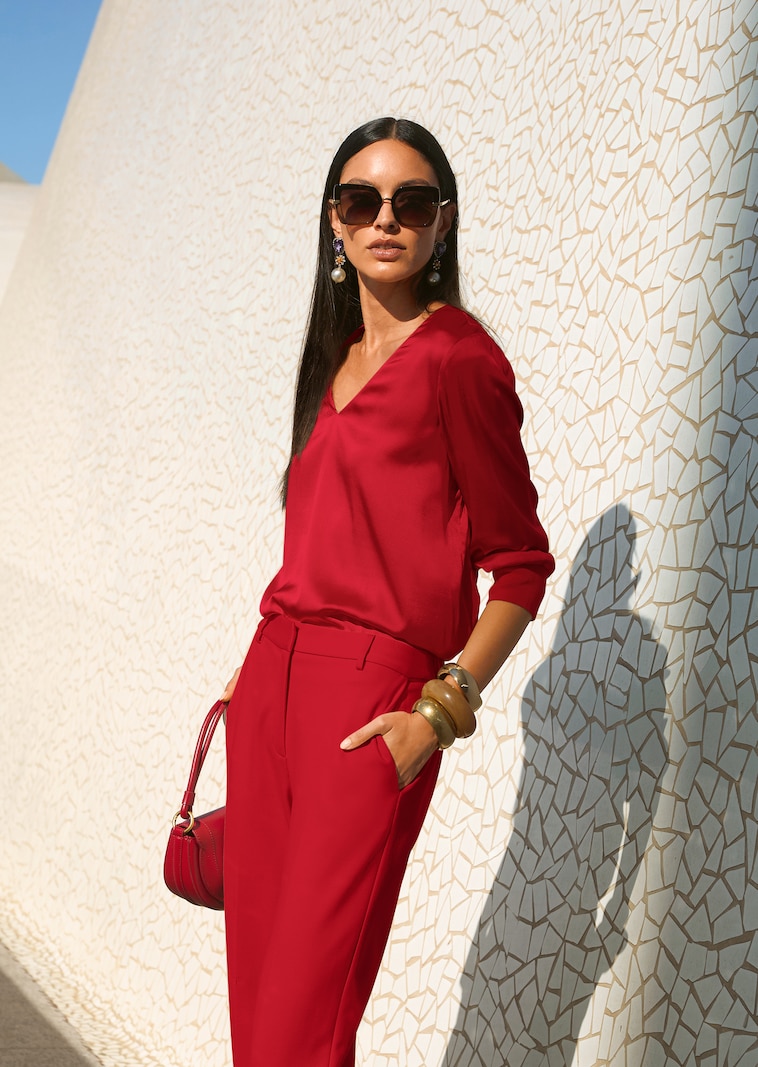
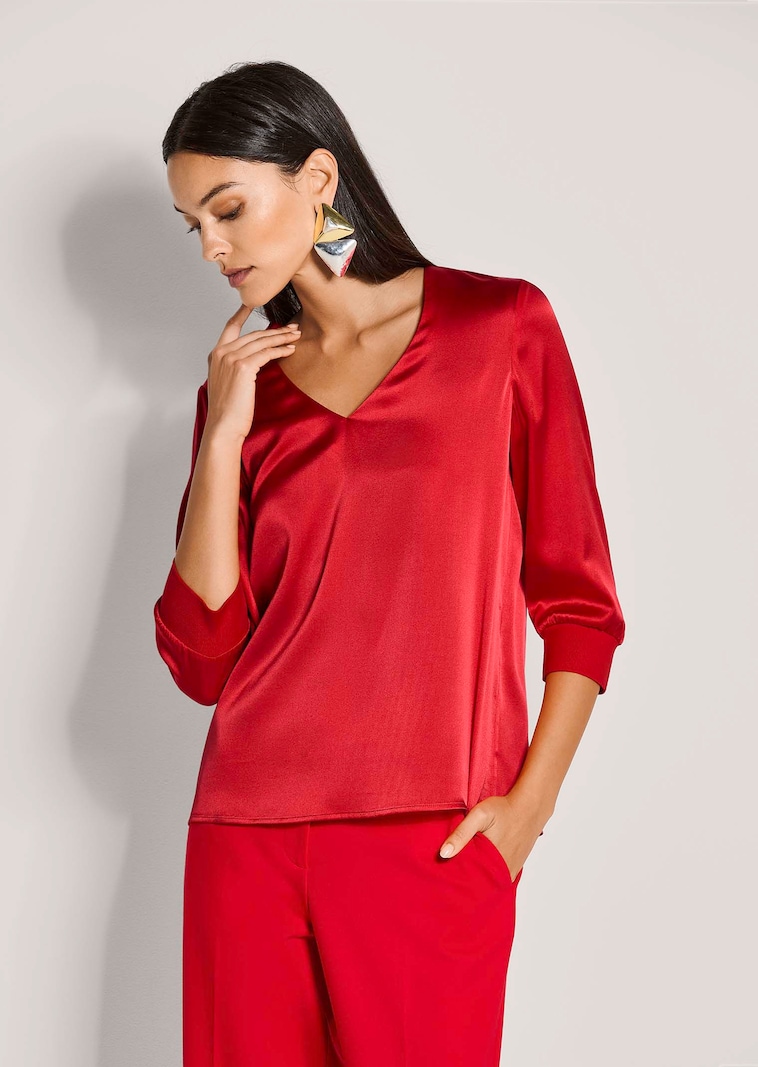
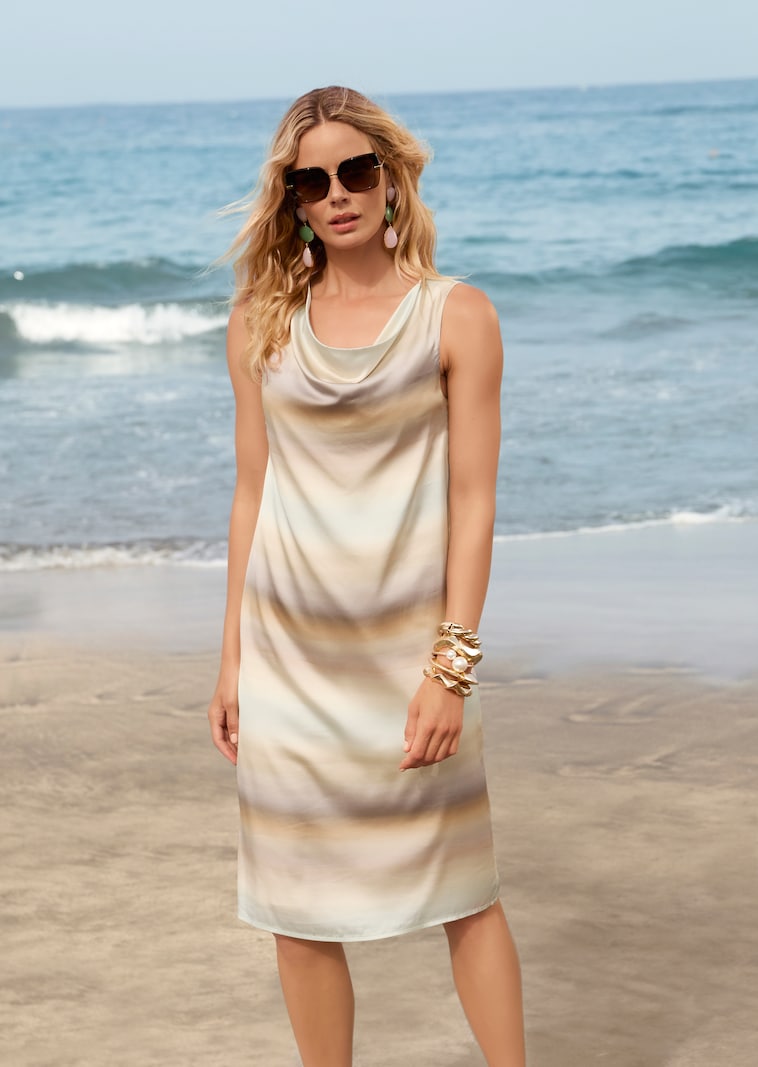
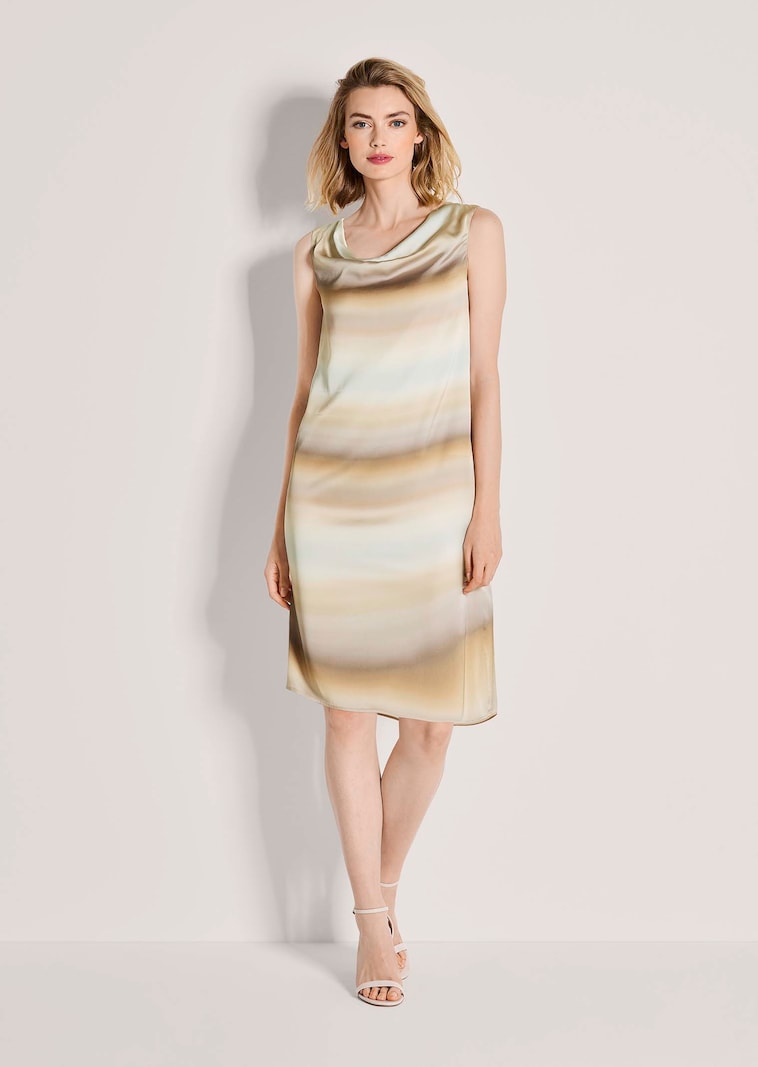
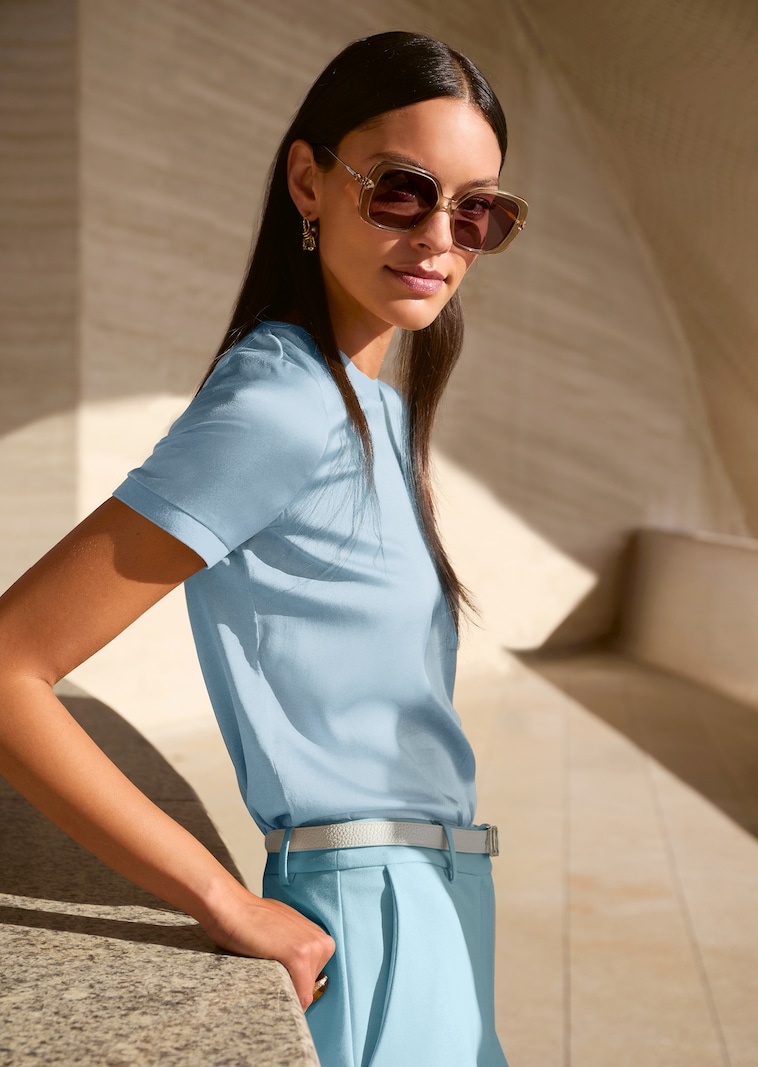
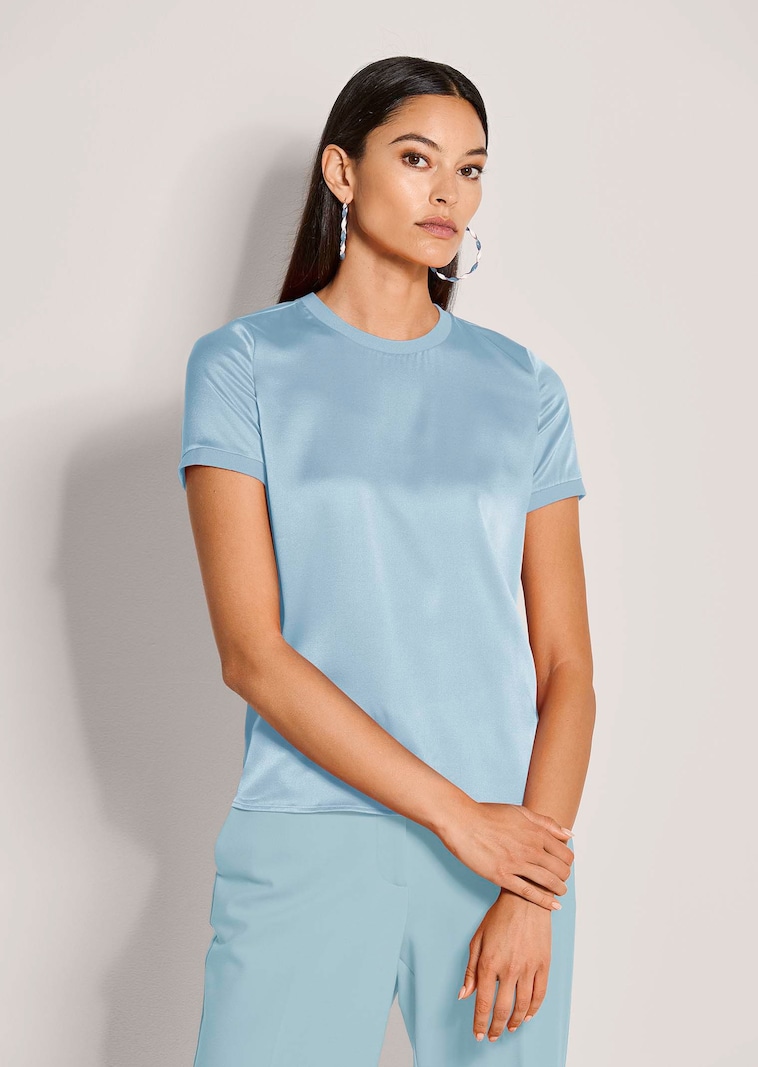
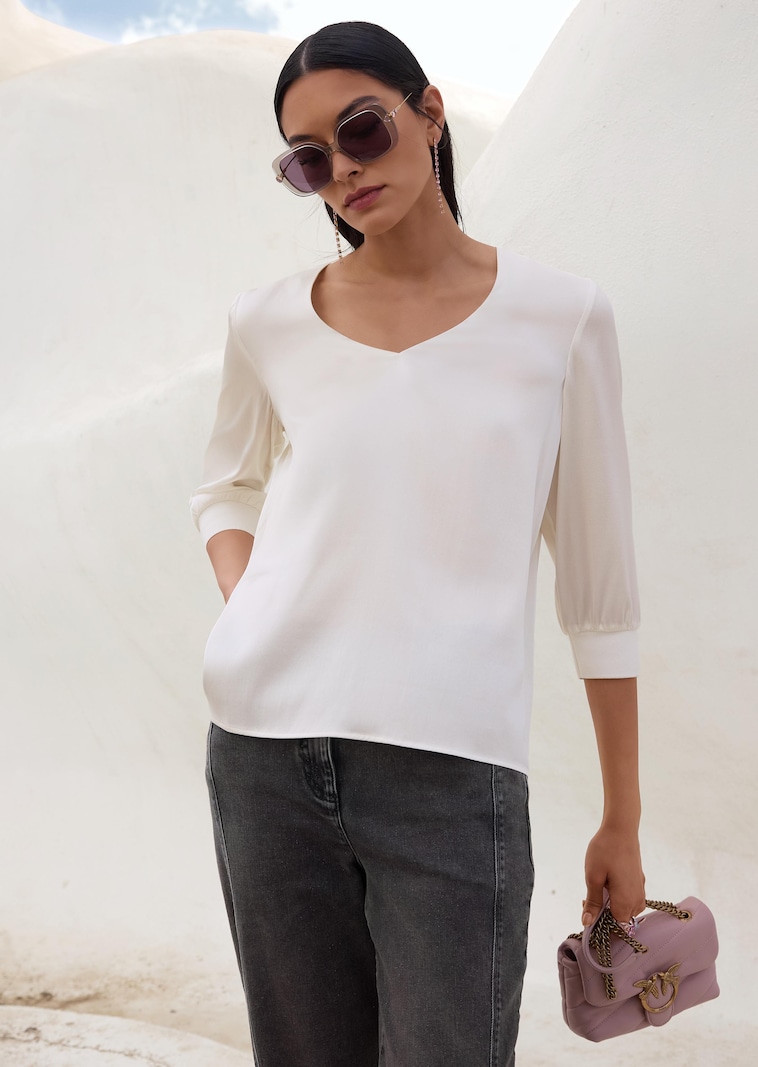
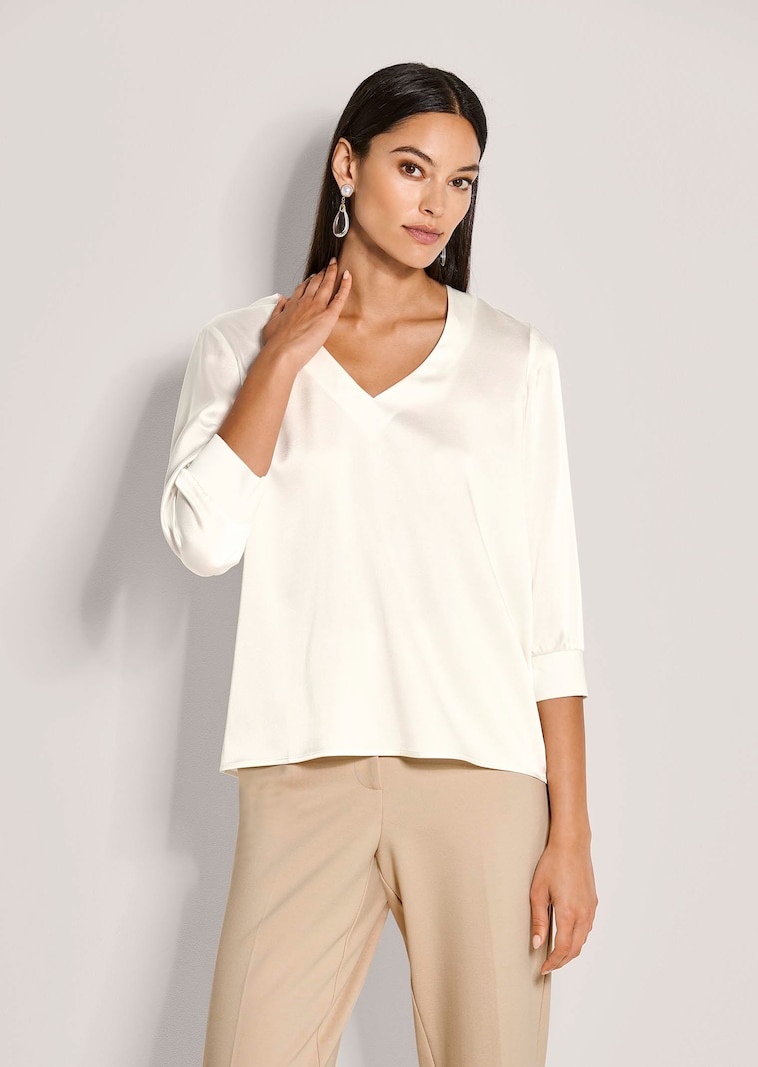
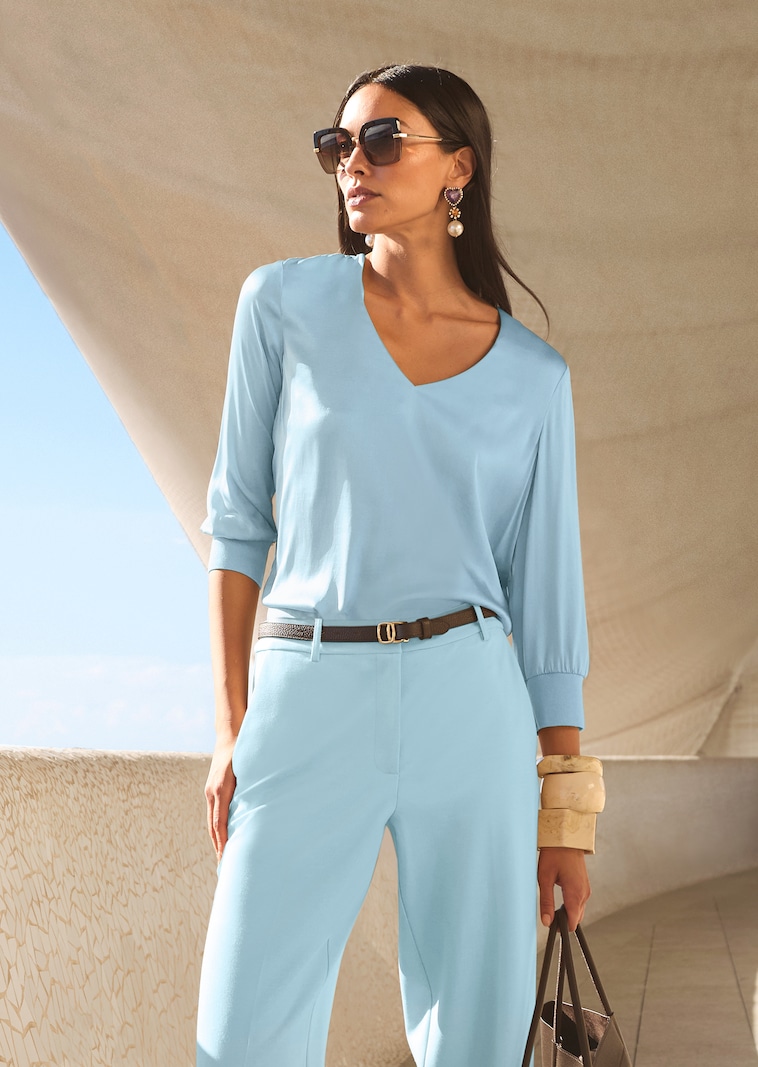
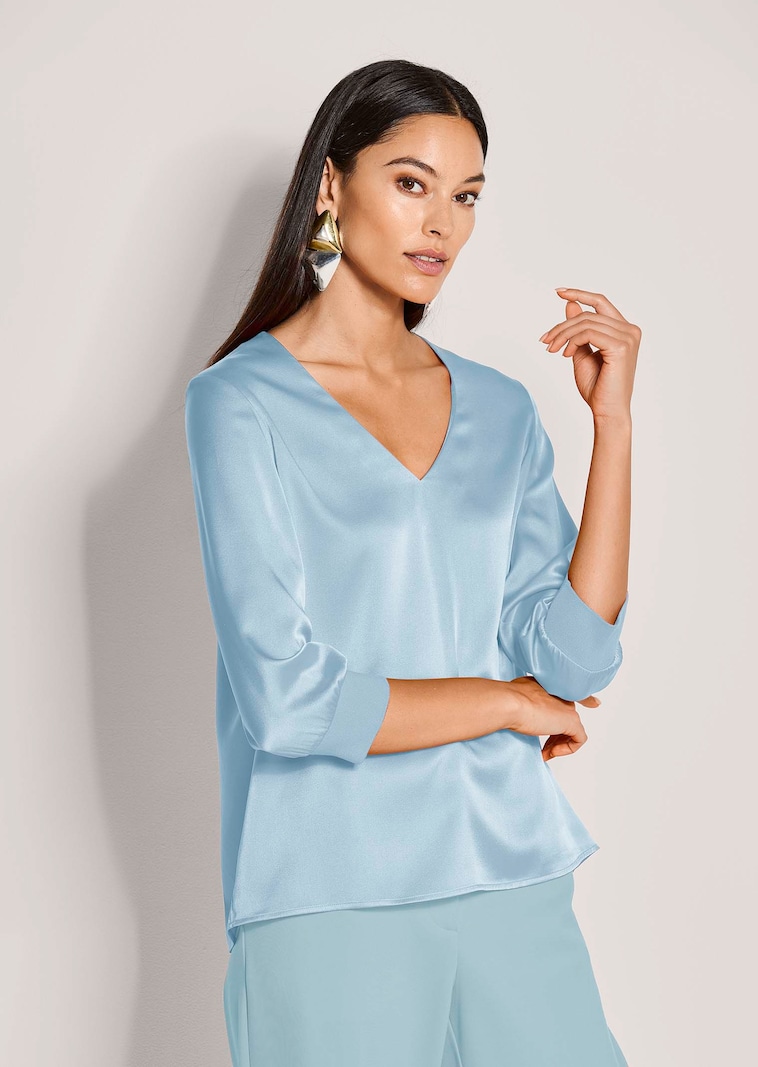
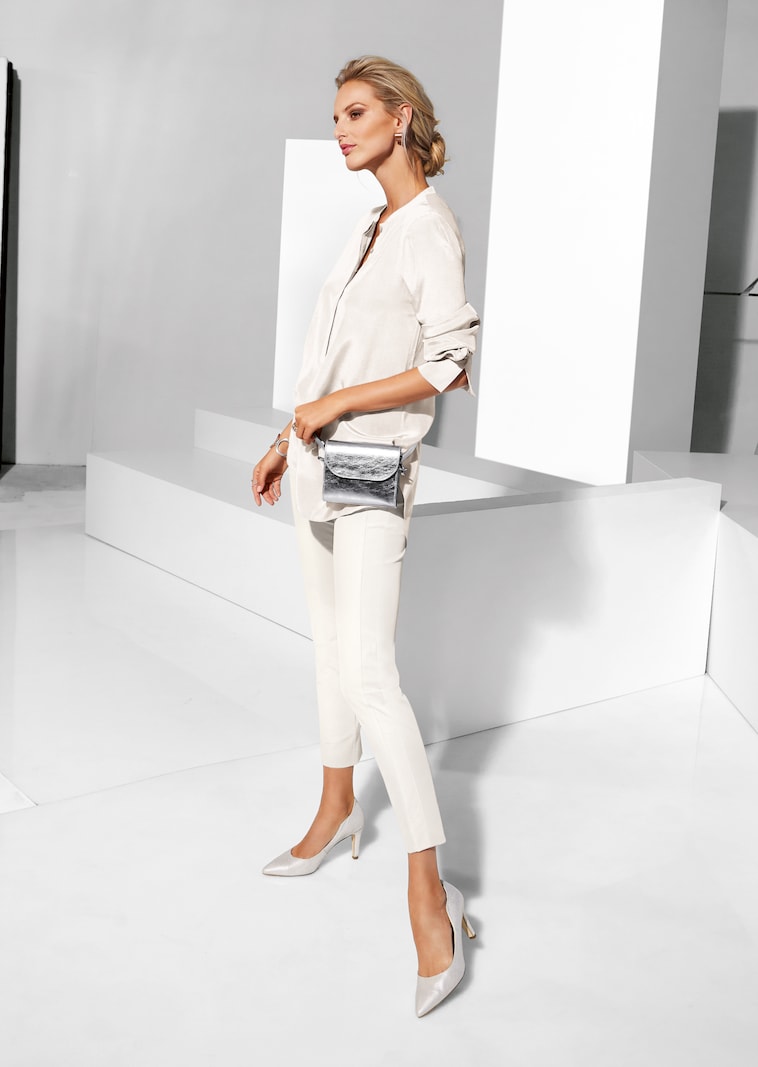
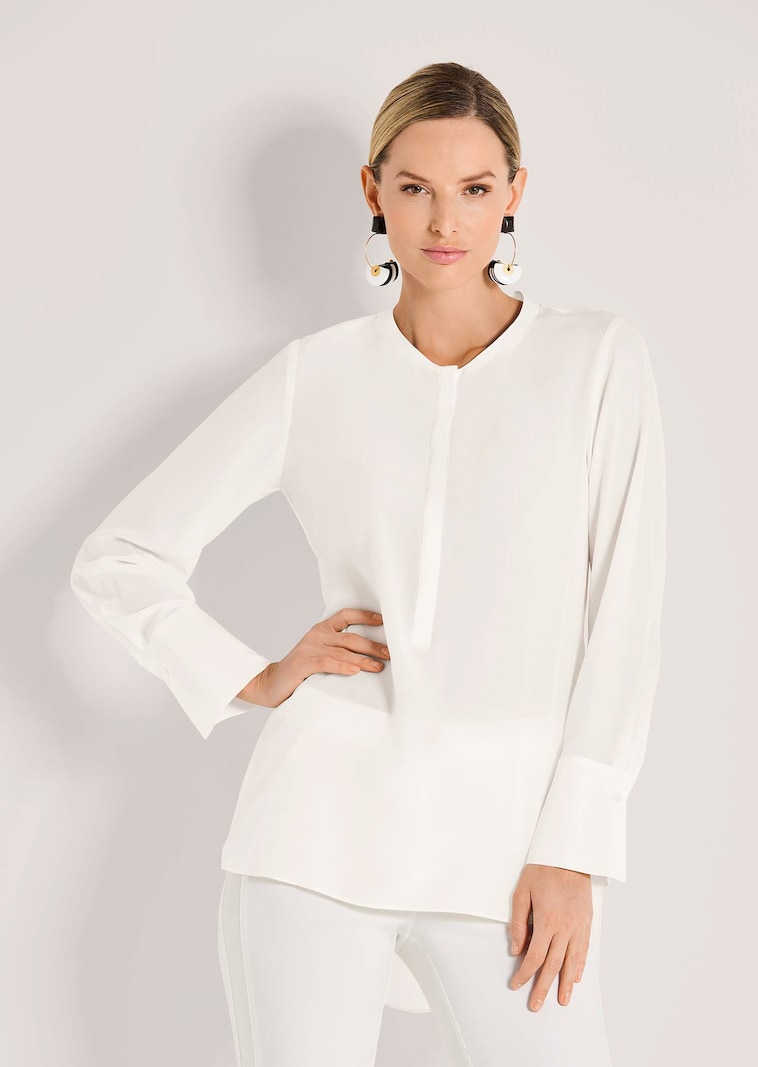
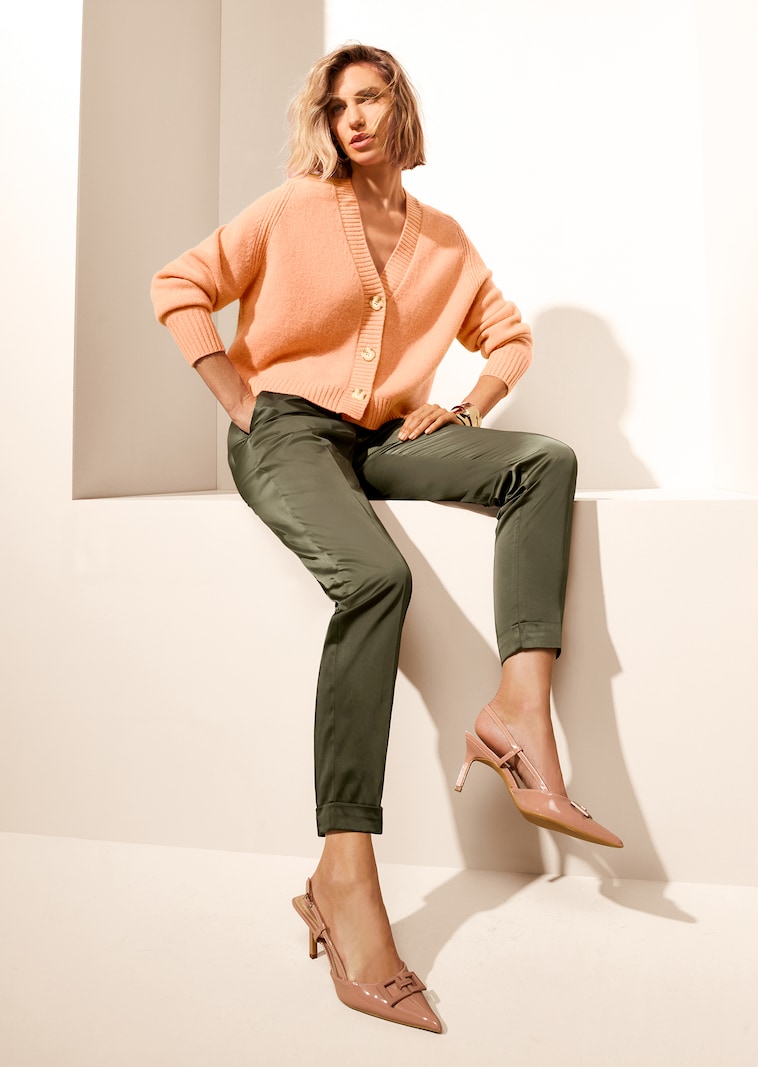
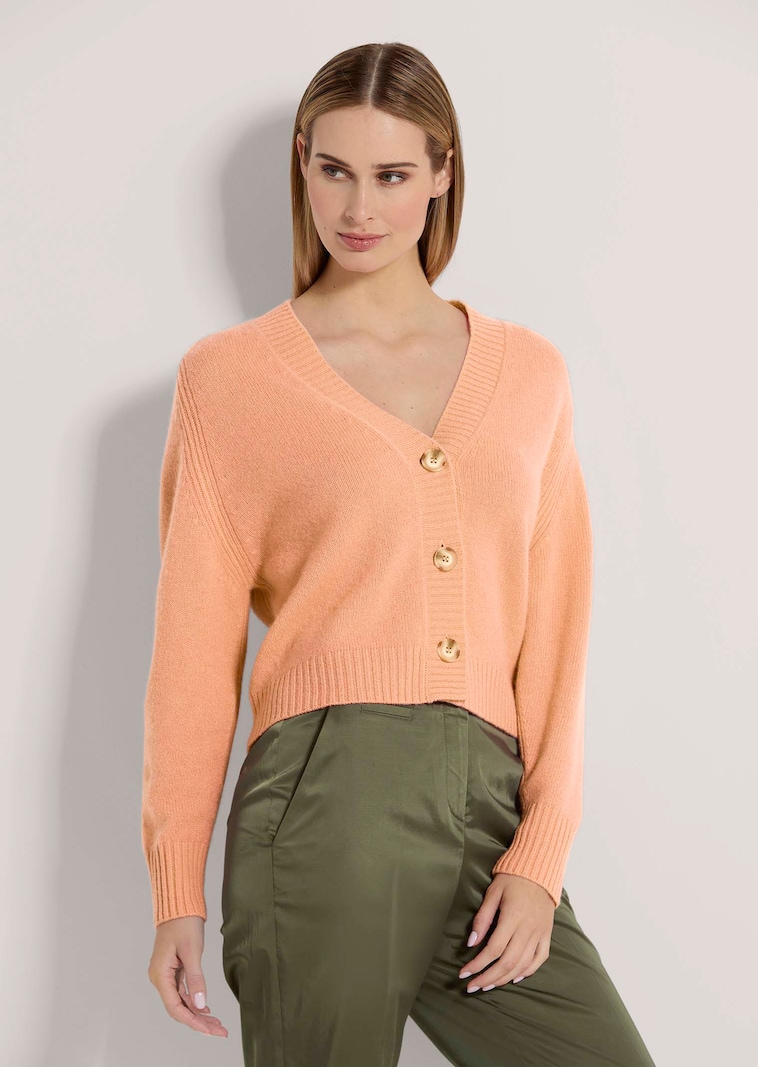
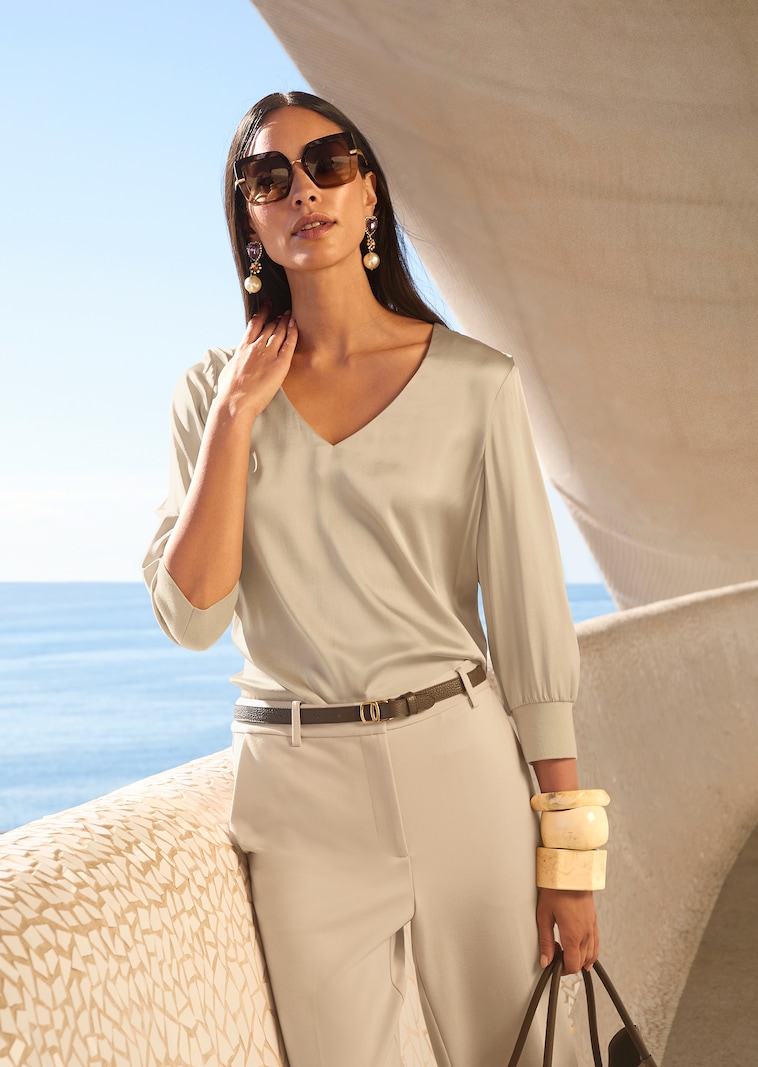
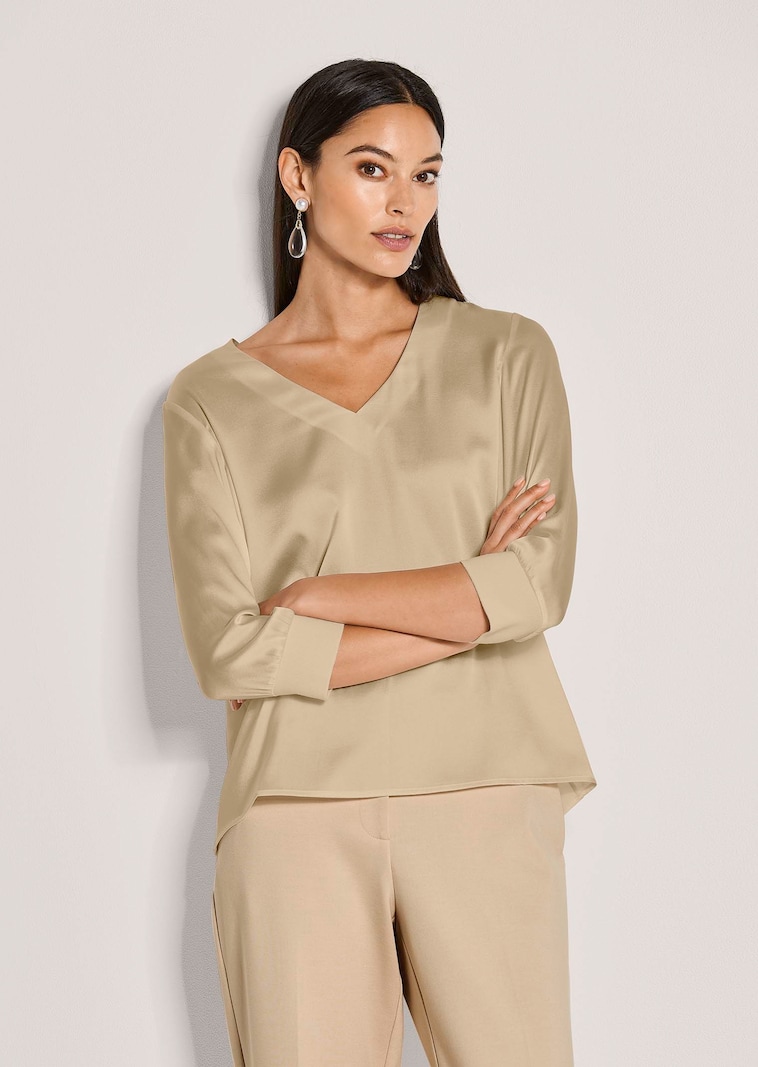
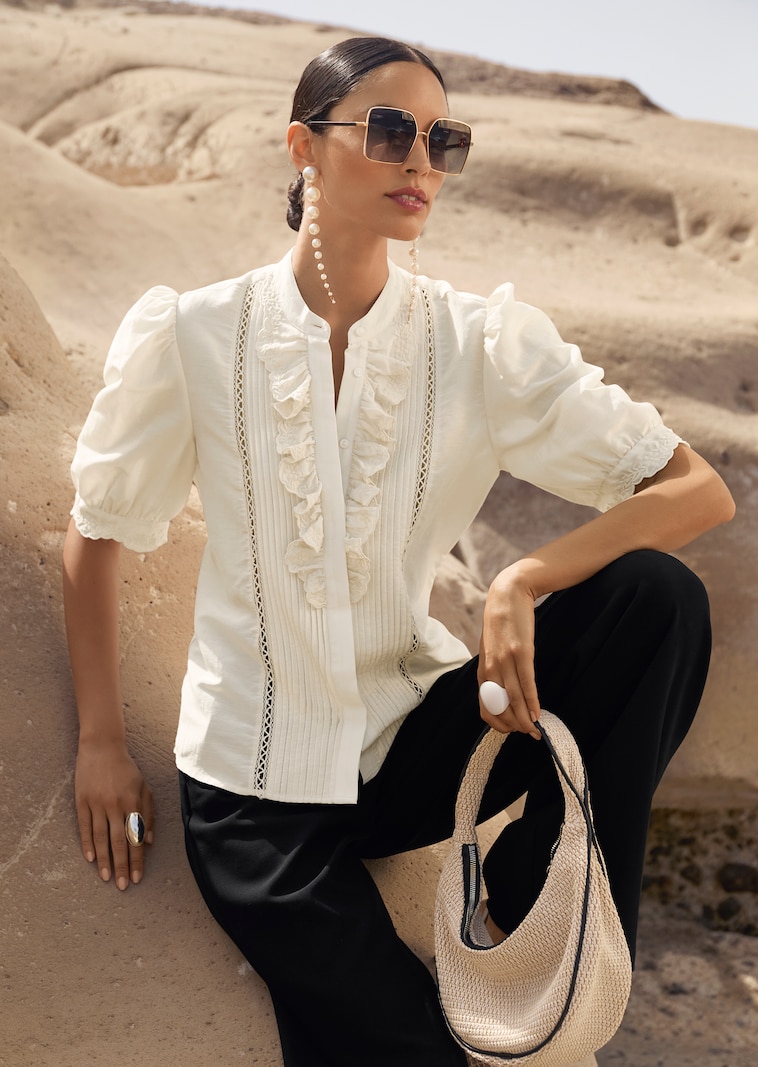
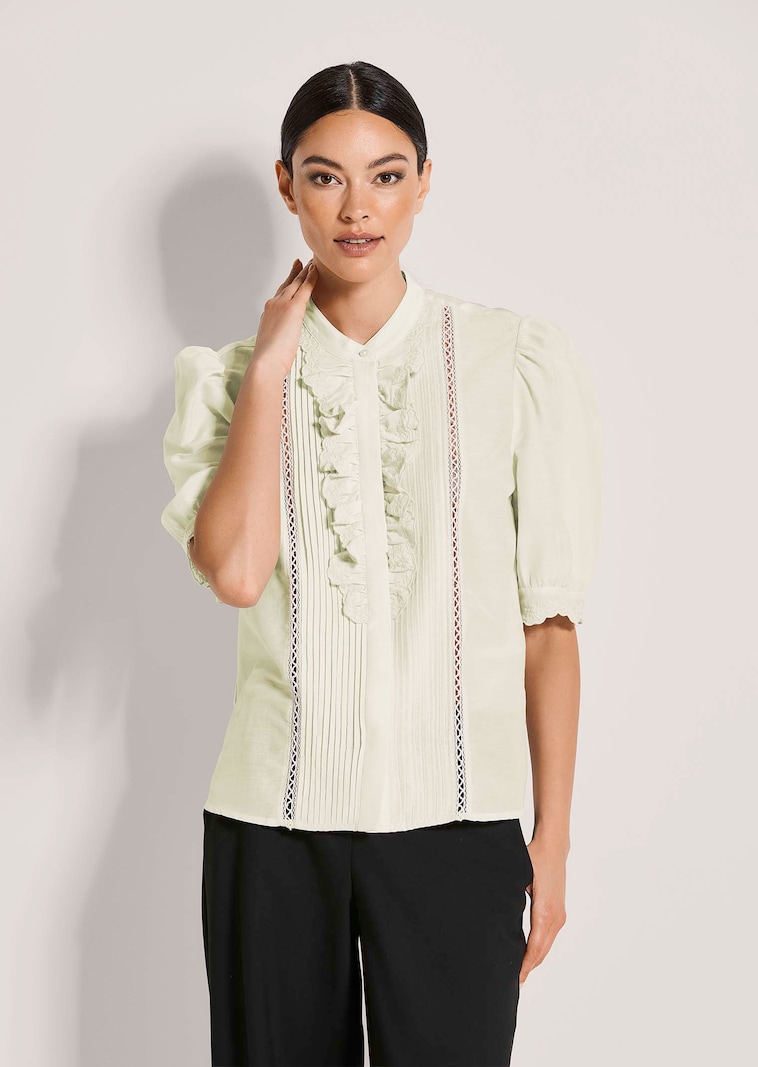
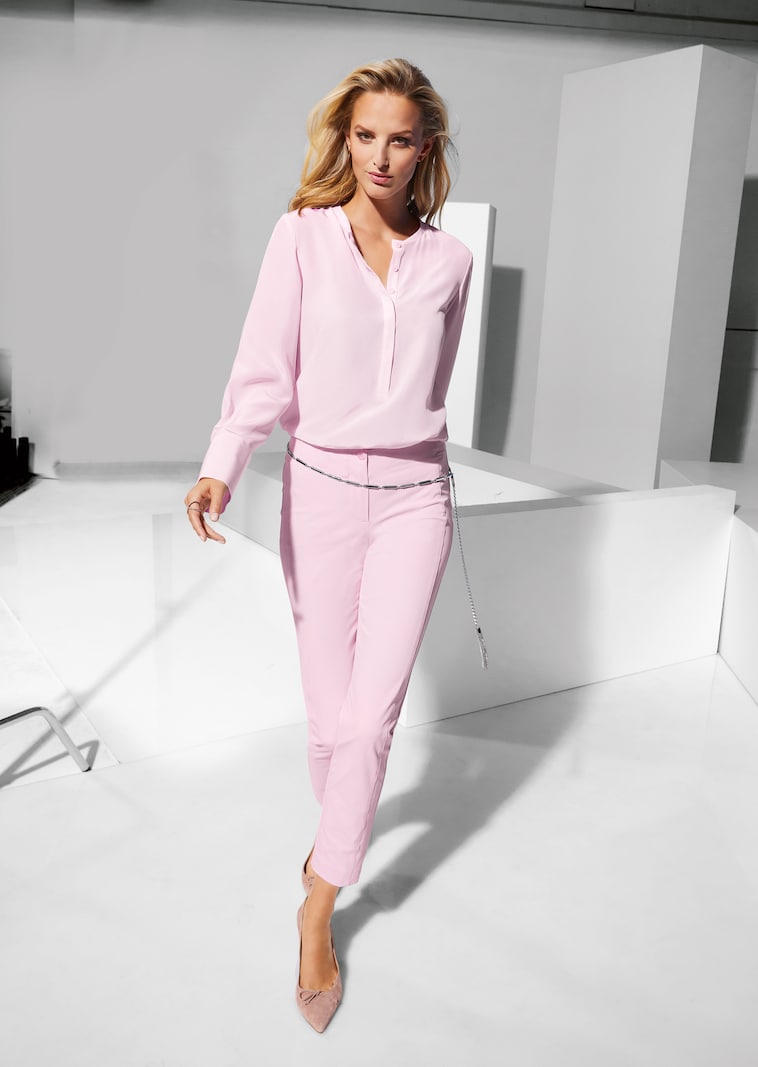
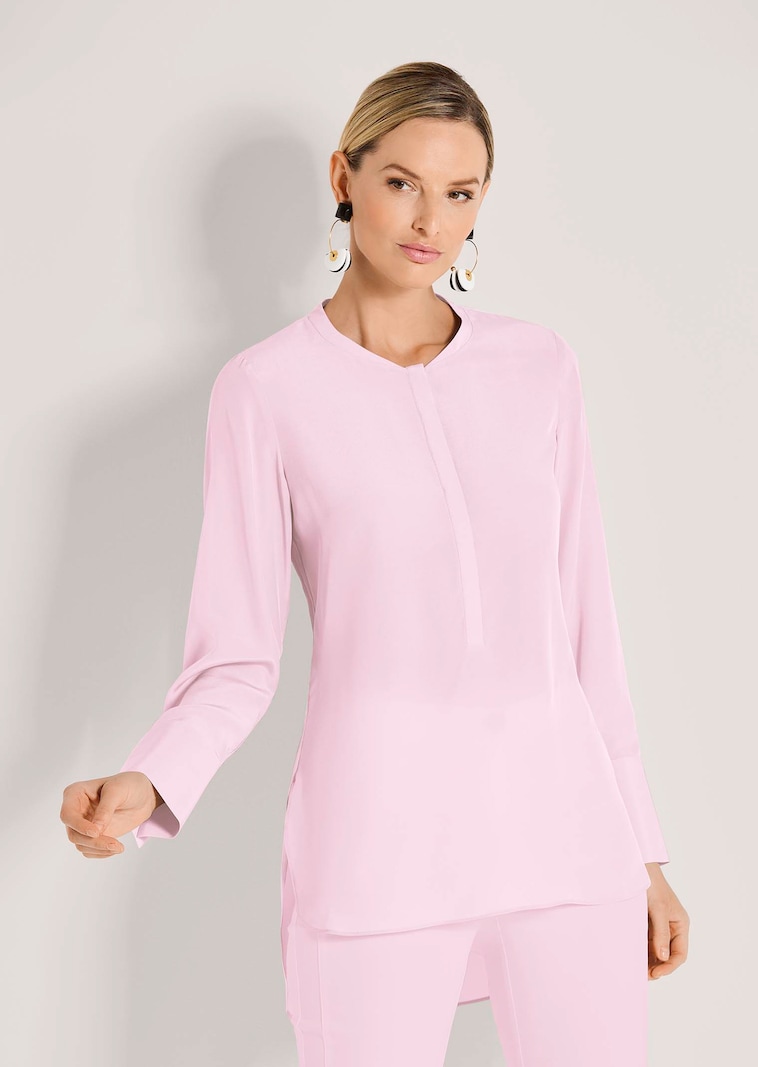
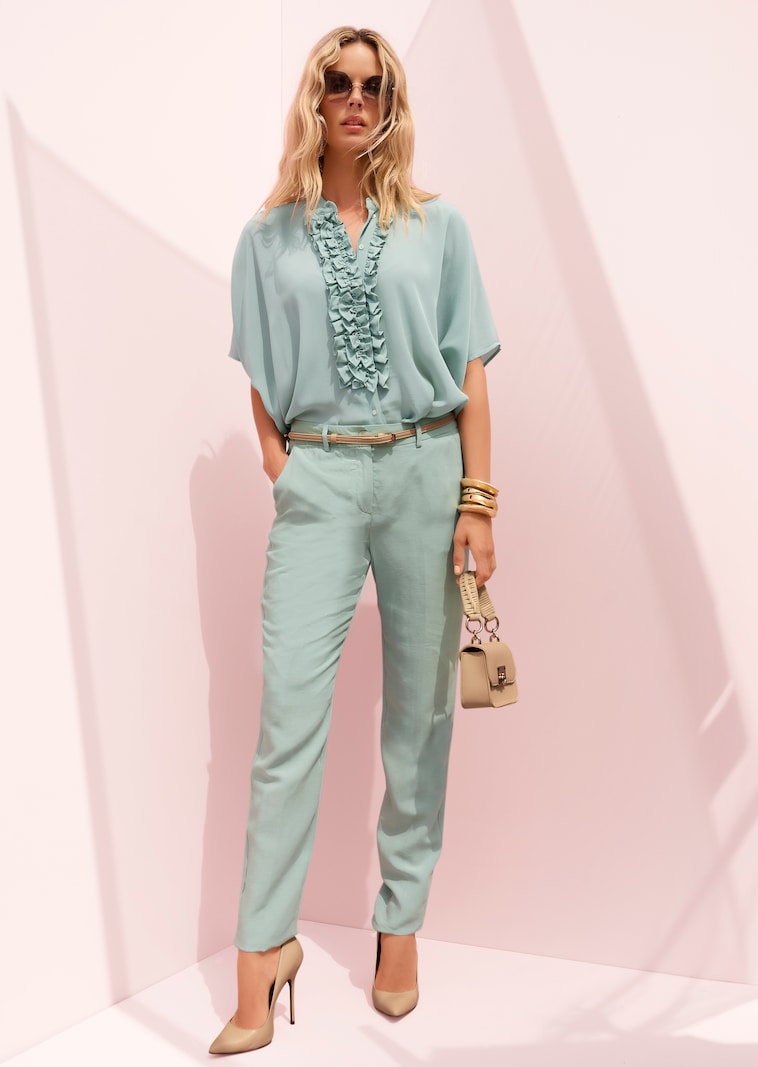
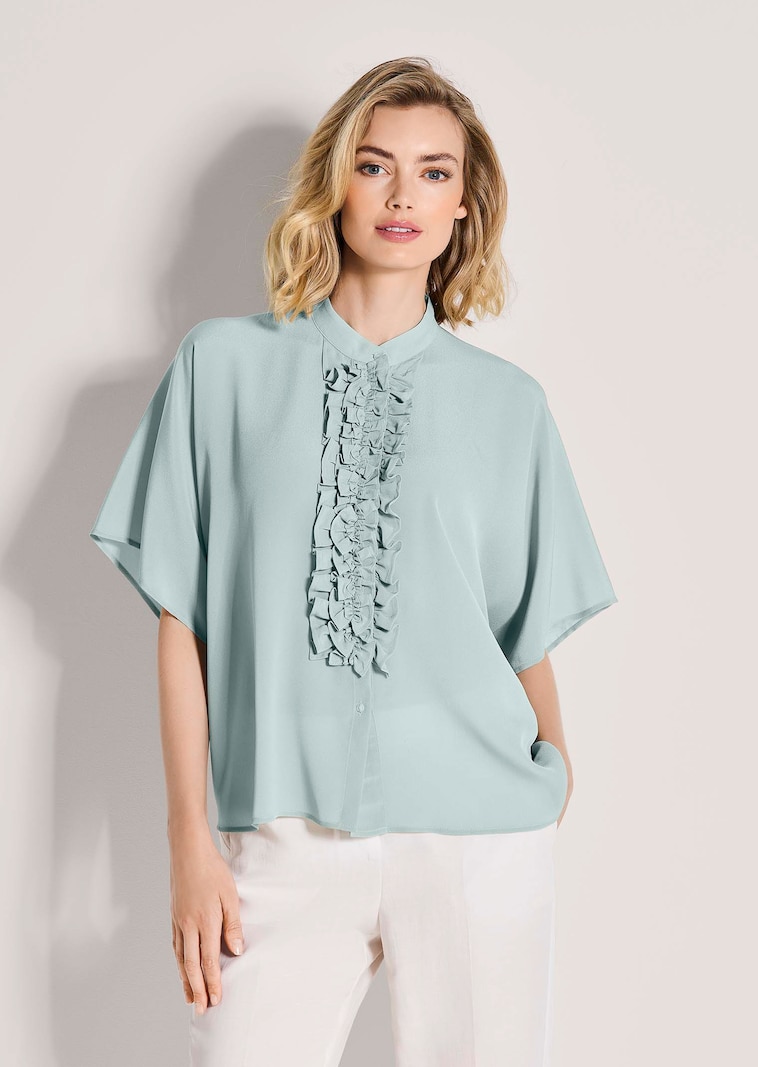
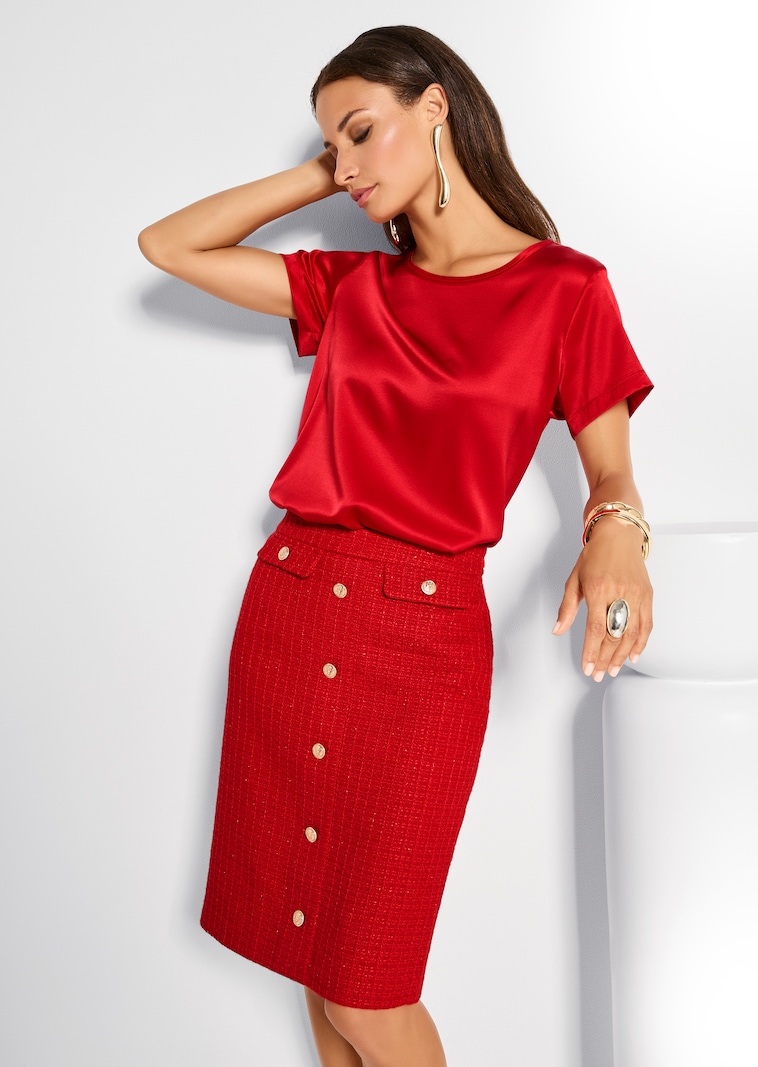
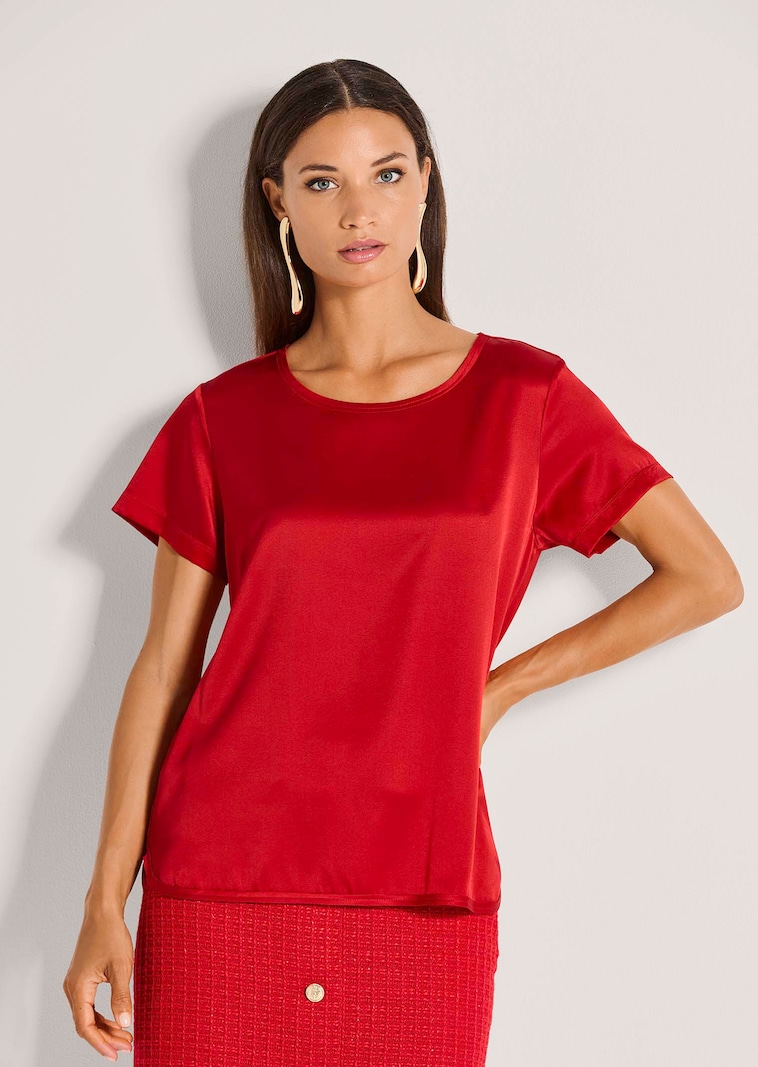
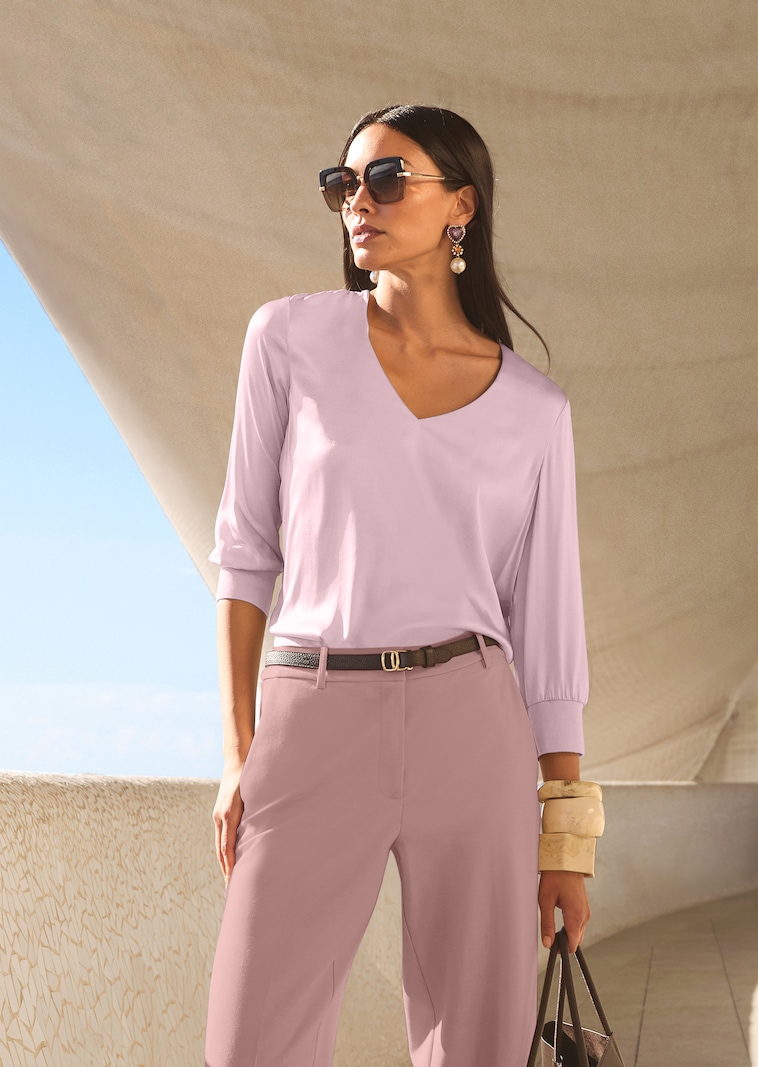
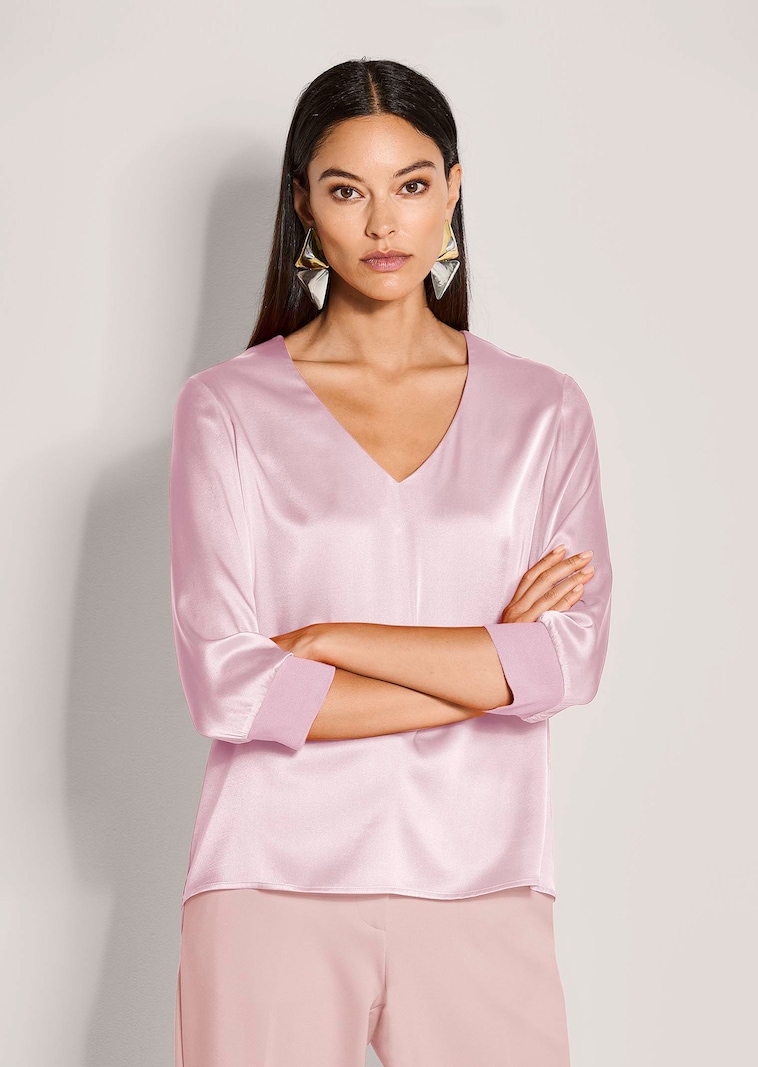
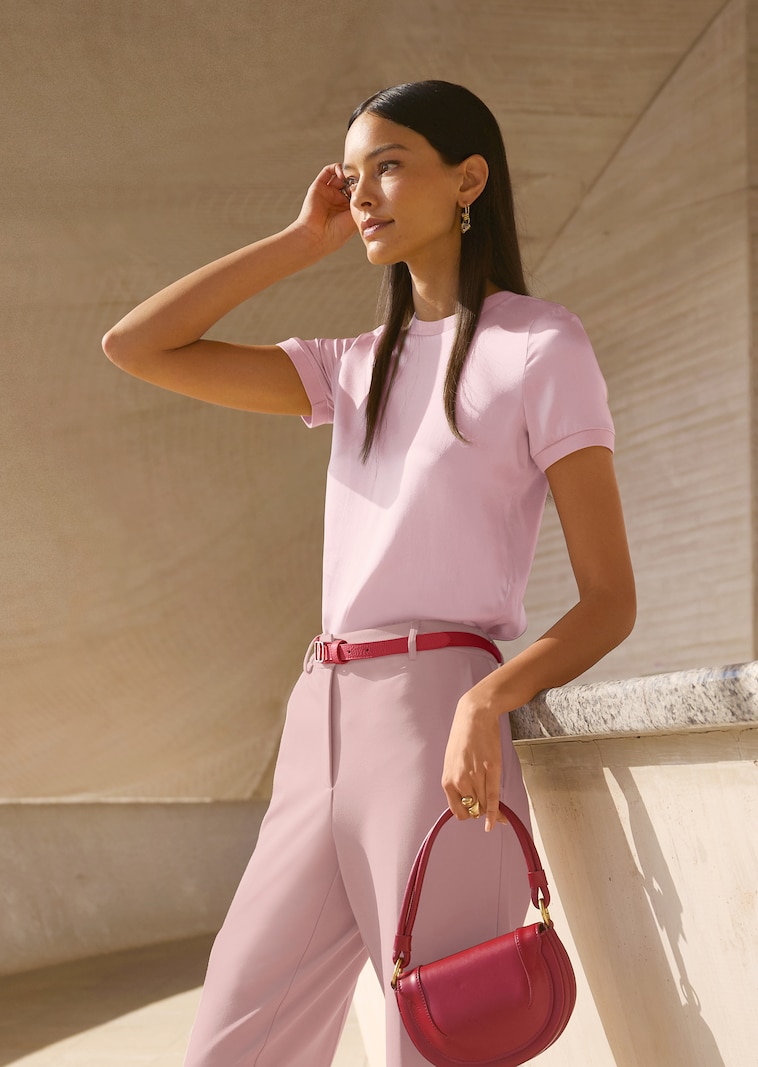


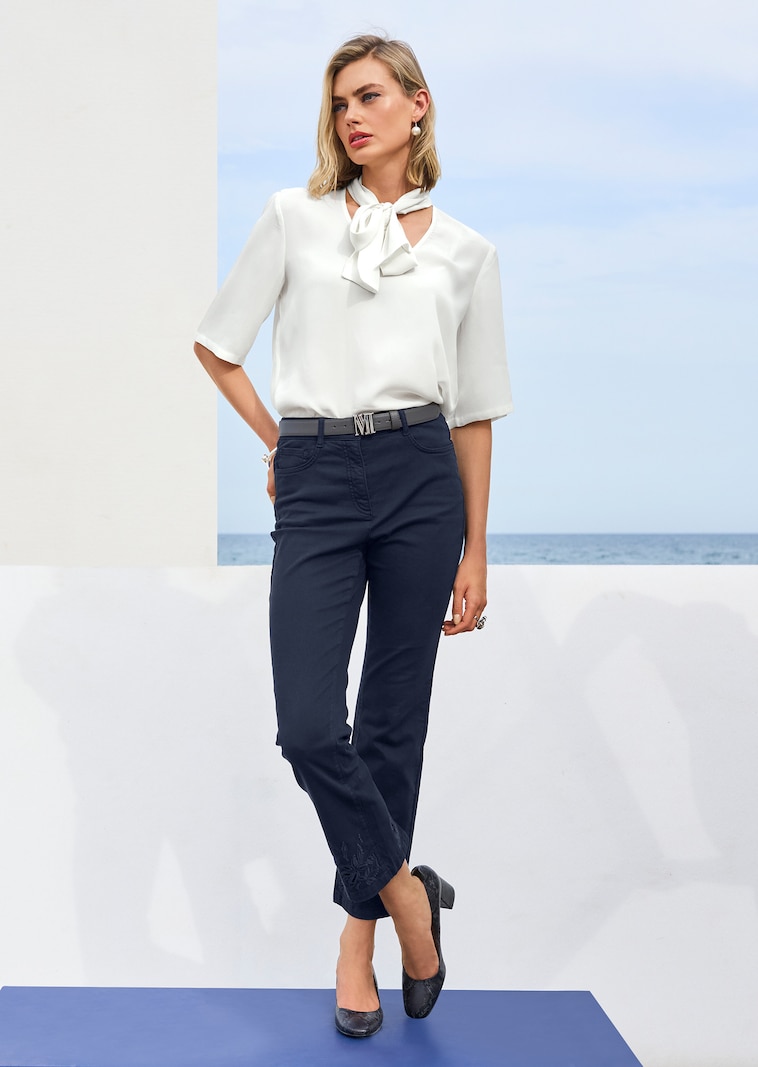
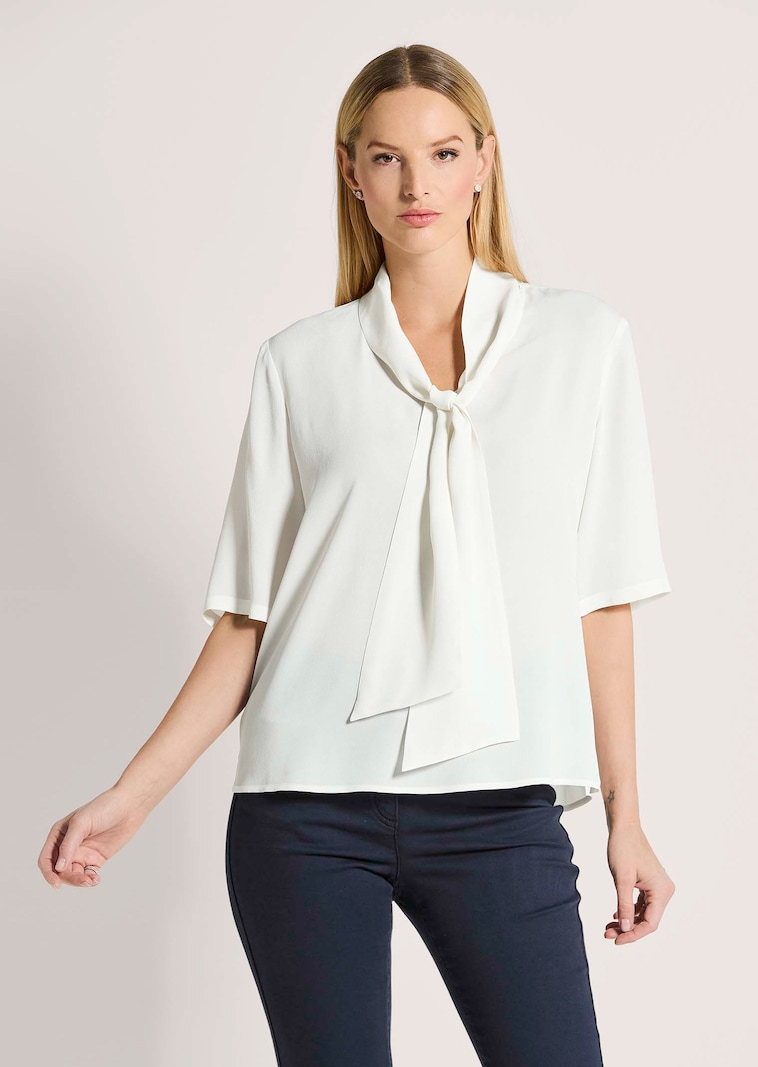
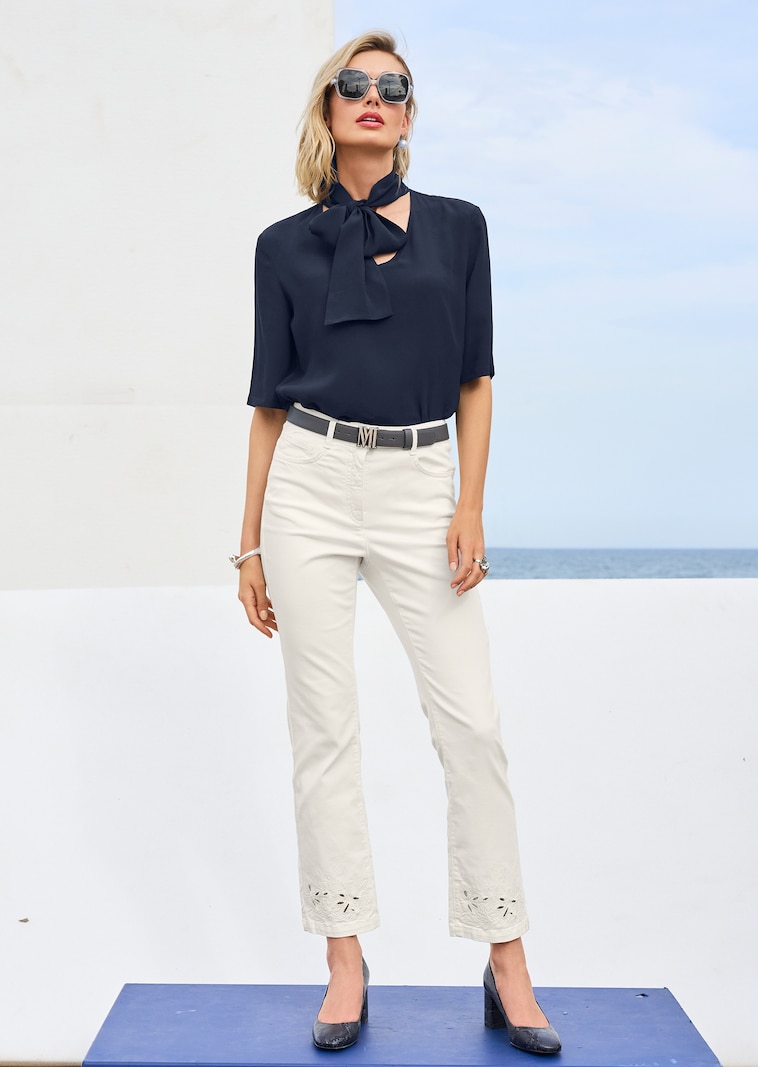
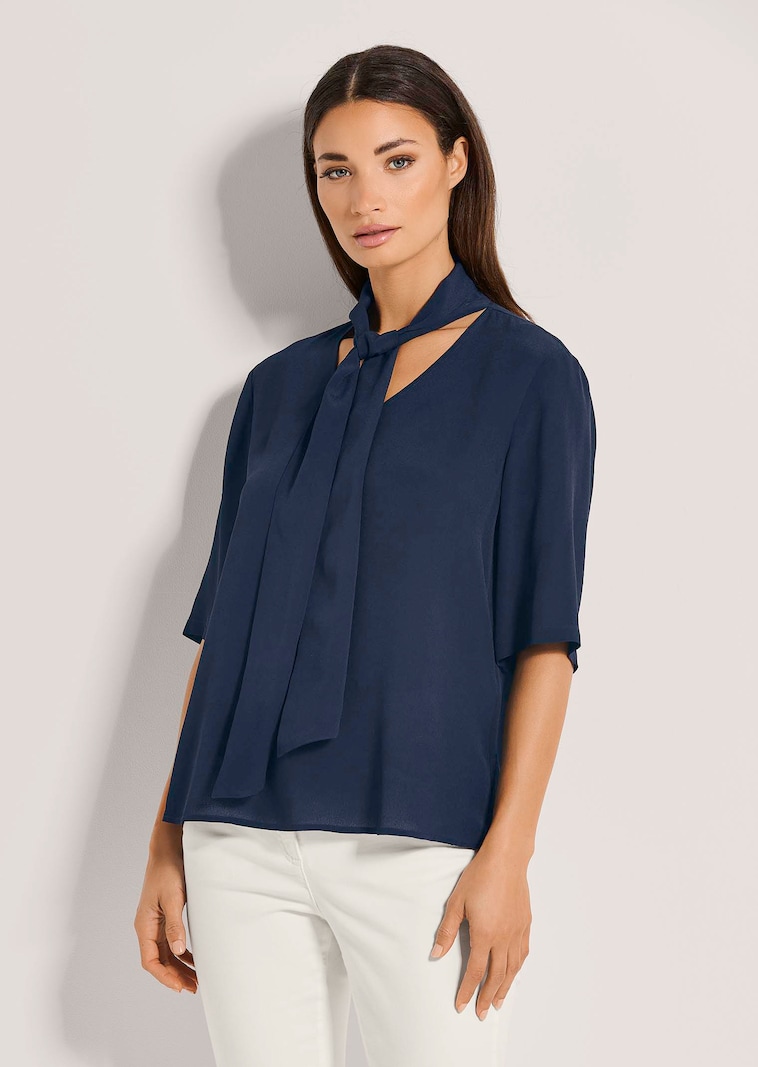
The fabric from which favourite pieces are made
We all know silk – as the epitome of elegance and preciousness. But silk is more than that. It is a material that proves astonishingly versatile: as a light silk top in summer, a festive dress for special evenings, an elegant silk blouse for the office or a warming knit with a touch of silk in winter. Silk adapts – to the occasion, to the season, to the woman who wears it. And the most beautiful thing about it? It does not grow old. It endures.
Discover the MADELEINE silk collection now – your next favourite piece is waiting:
Fashion in silk: timeless luxury, fluid silhouettes and elegant sheen
Silk is the queen of natural fibres – and has been for thousands of years. What makes silk so irresistible? Its natural sheen, luxurious feel and beautifully fluid drape. Silk fashion is not a trend. It is a timeless classic that never loses its appeal.
What makes silk such a special fabric?
Silk is an animal-based fibre, obtained from the cocoon of the silkworm. What sets it apart from other materials is its unique structure: silk fibres consist of natural proteins that are remarkably similar to the structure of human skin. That is why silk feels so exceptionally comfortable to wear.
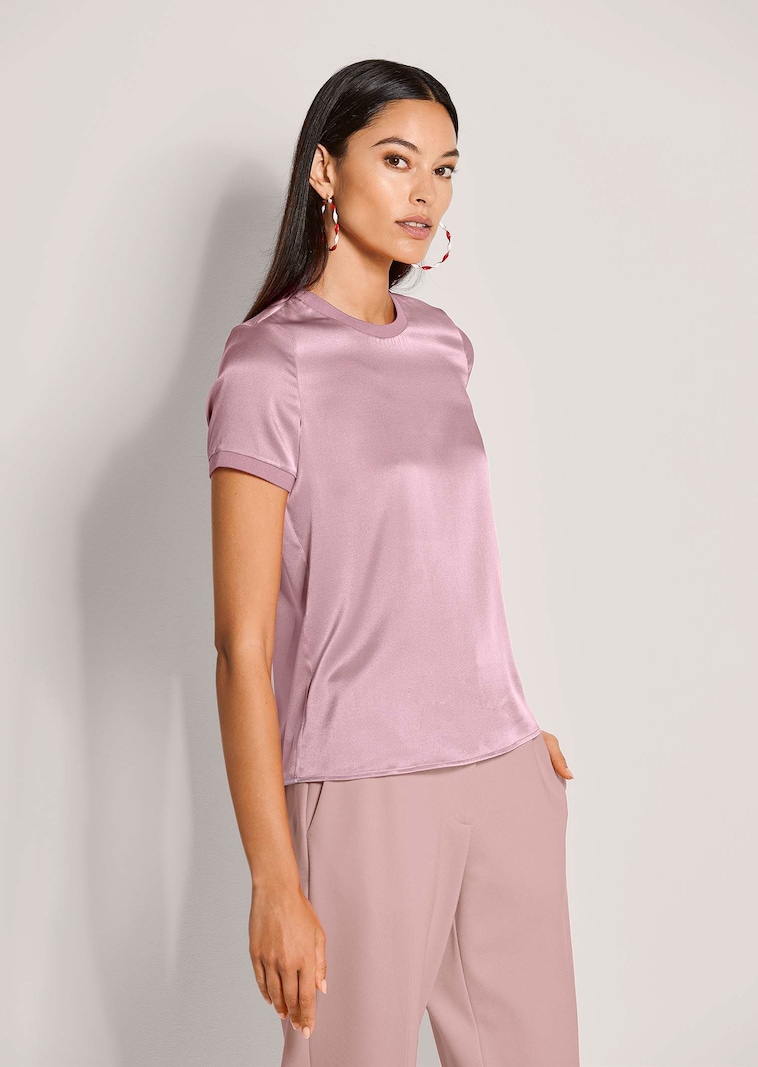
Silk sheen: the characteristic sheen of silk comes from the triangular prism-like structure of the fibres, which refracts and reflects light. No other natural material shines in quite the same way.
Breathable and skin-friendly: silk absorbs moisture and releases it again without feeling damp – making it ideal even for sensitive skin.
Lightweight and fluid: despite its strength, silk is feather-light. It feels barely noticeable against the skin and drapes beautifully.
Does silk keep you warm or cool?
The fascinating thing is: it can do both. Cool and warm. As a natural protein fibre, silk has thermoregulating properties very similar to those of human skin.
In warm weather, it cools: silk is breathable and can absorb up to 30% of its own weight in moisture without feeling wet. Perspiration is drawn away from the body and evaporates, creating a pleasant cooling effect on the skin. And because the smooth silk surface glides gently over the skin, movement feels especially cool and comfortable.
In cooler temperatures, it warms: silk conducts heat poorly and therefore acts as an ultra-light natural insulator. It traps a layer of air close to the body – and because air itself is a poor conductor of heat, body warmth stays exactly where it belongs.
What do mulberries have to do with silk?
Quite simply: everything. Mulberry silk is produced from the cocoons of silkworms – and silkworms feed exclusively on mulberry leaves. The caterpillars spin themselves into cocoons made from a single thread that can measure up to 900 metres in length. As fine as a whisper and as precious as almost no other material. This principle was discovered in China more than 5,000 years ago and has remained unchanged ever since. It is no surprise that mulberry silk is considered the finest and most luxurious silk in the world.
Silk chiffon, silk satin and more – what types of silk are there?
Not all silk is the same. Alongside precious mulberry silk, there are many different silk varieties – and above all, it is the weave that determines how a fabric feels, drapes and where it is best worn.
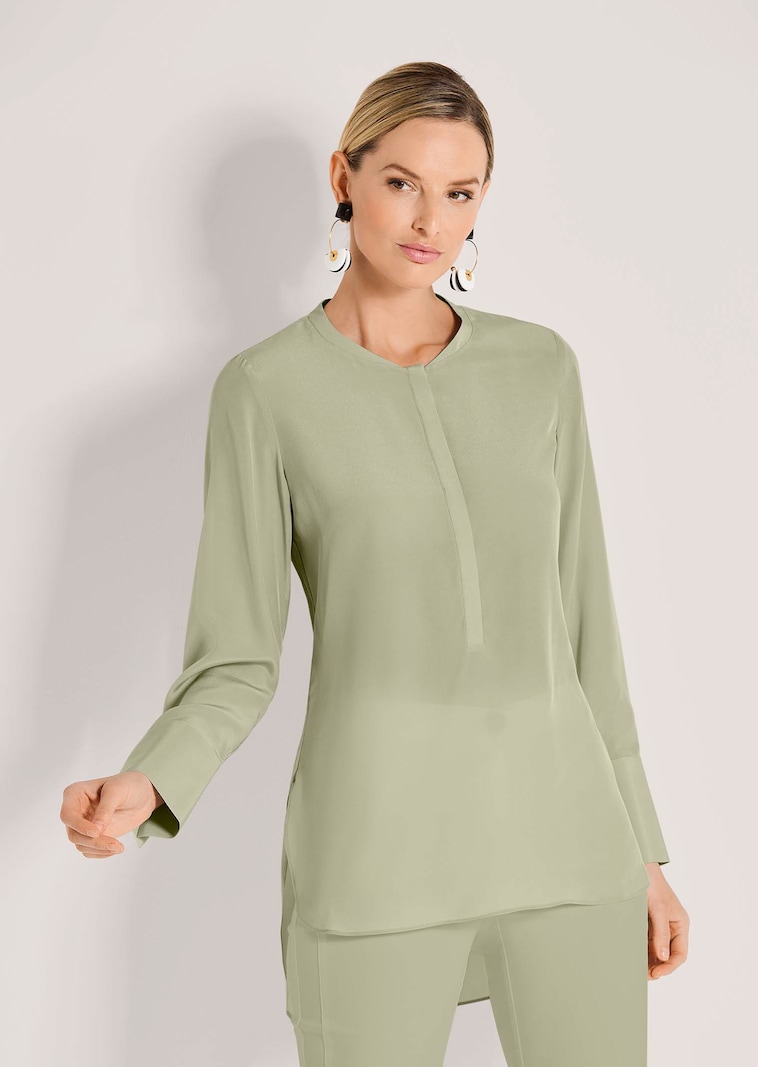
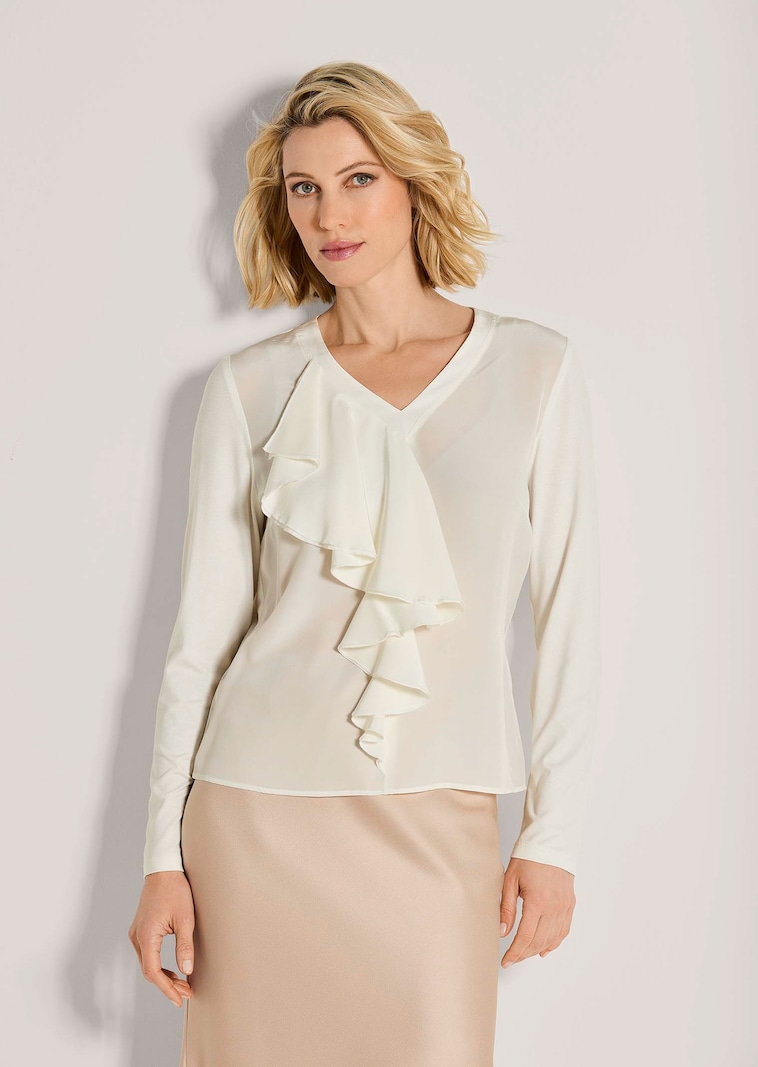
Silk chiffon: whisper-light, sheer and airy – chiffon is the romantic side of silk with a beautifully fluid drape. Perfect for dresses, silk skirts and feminine blouses or tunics.
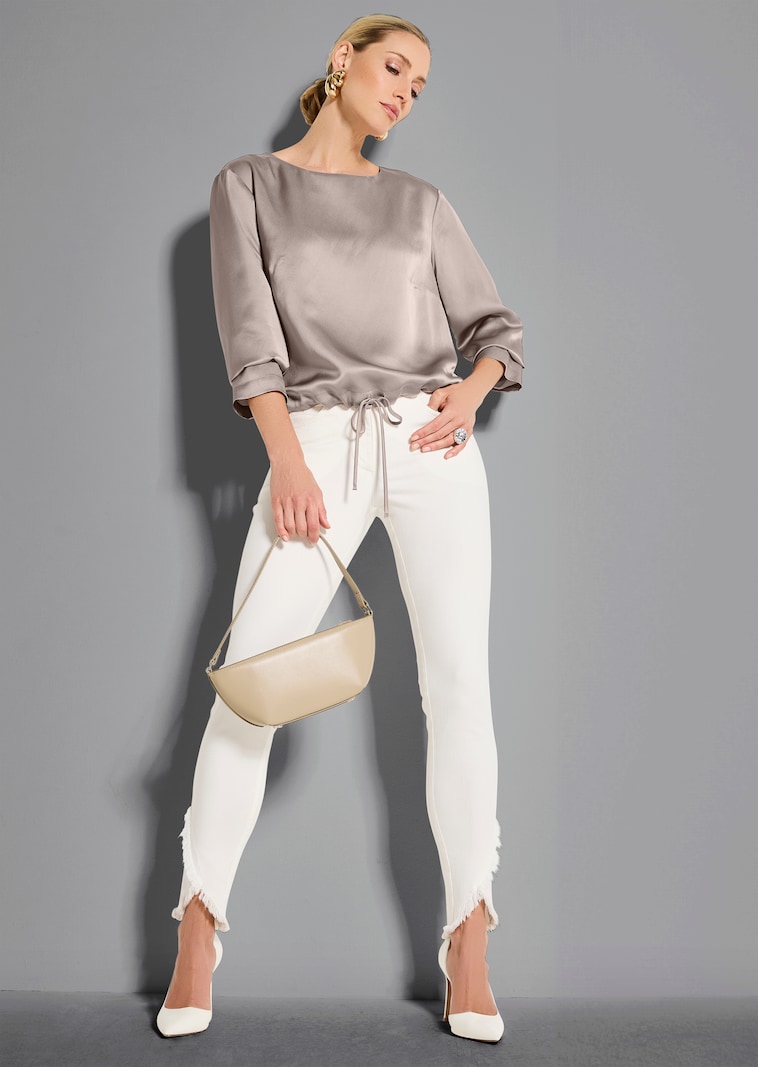
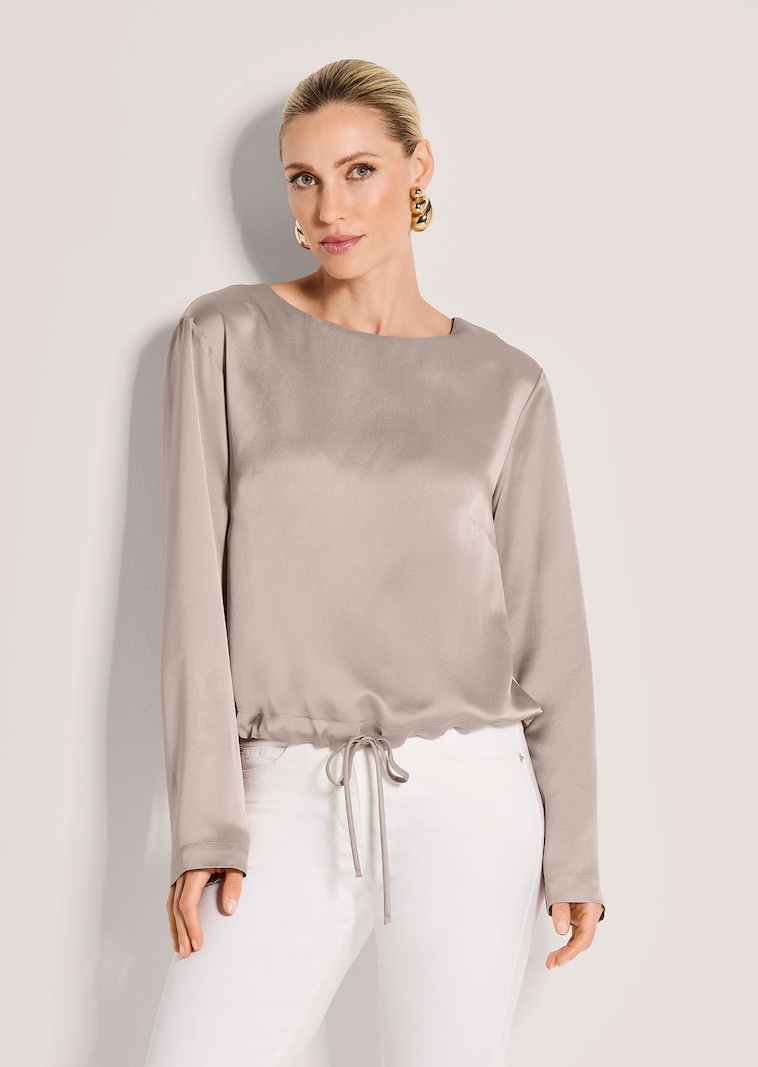
Silk satin: glossy on the front with a matte reverse, satin has an elegant and glamorous character.
An important note: satin refers to the weave, not the material itself. Satin can be made from silk, but it does not have to be.
Silk blends – when silk enhances everything around it
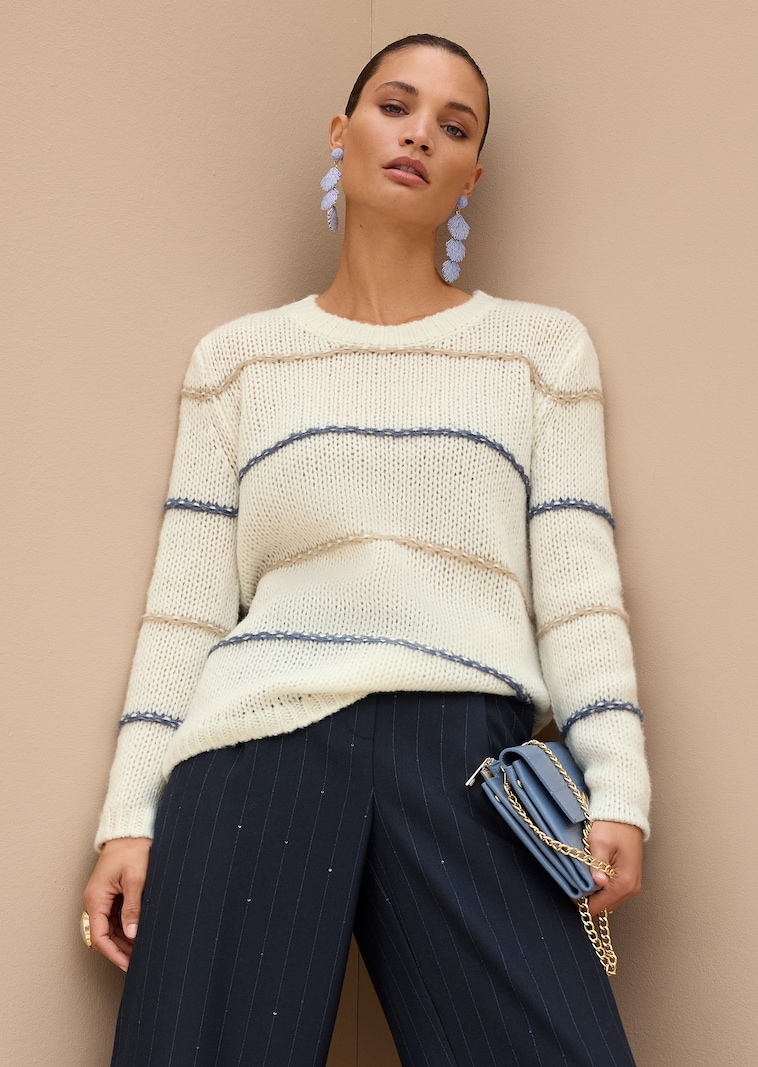
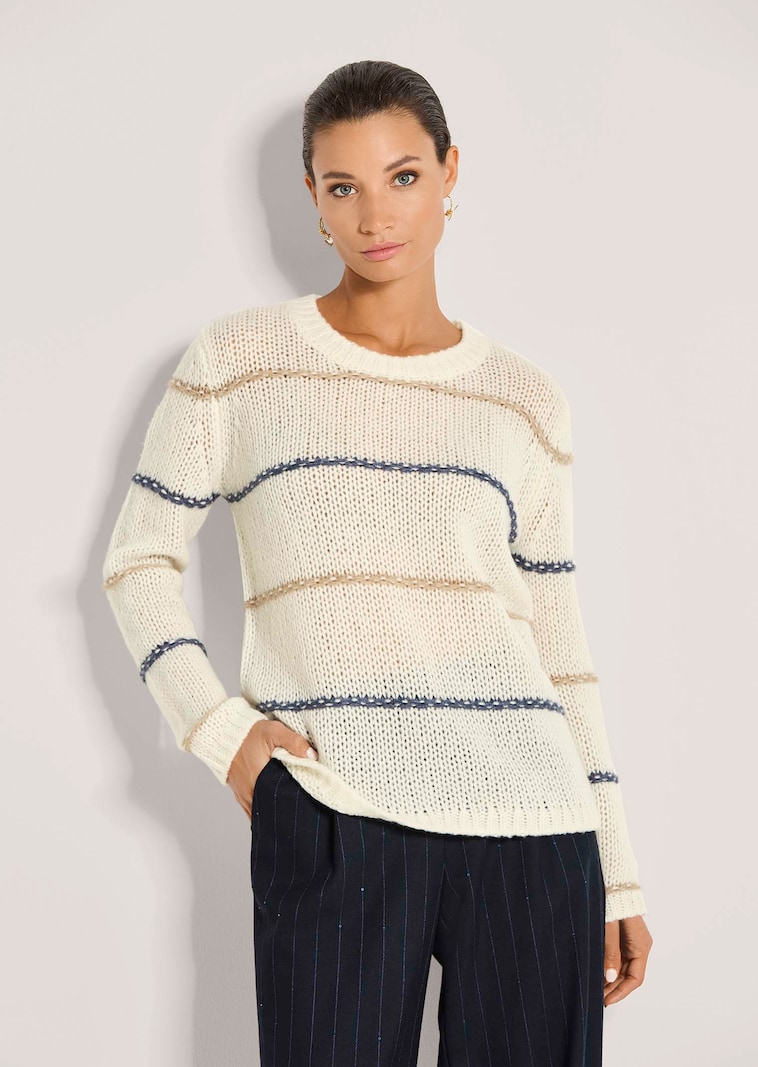
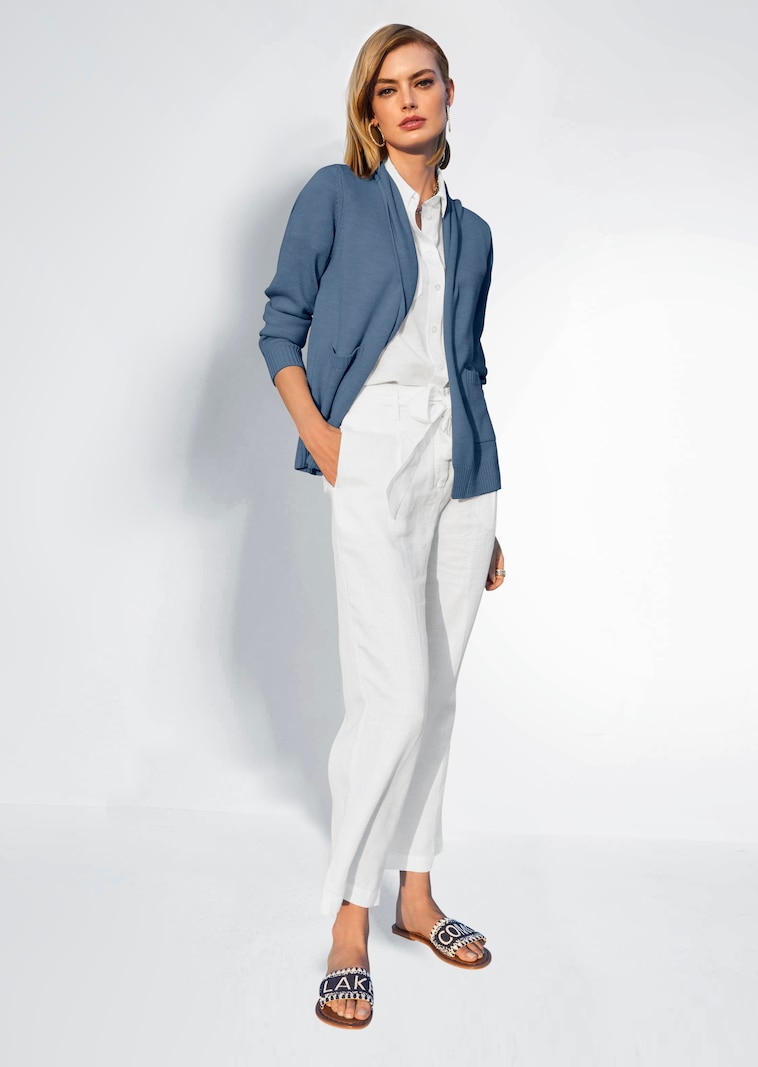
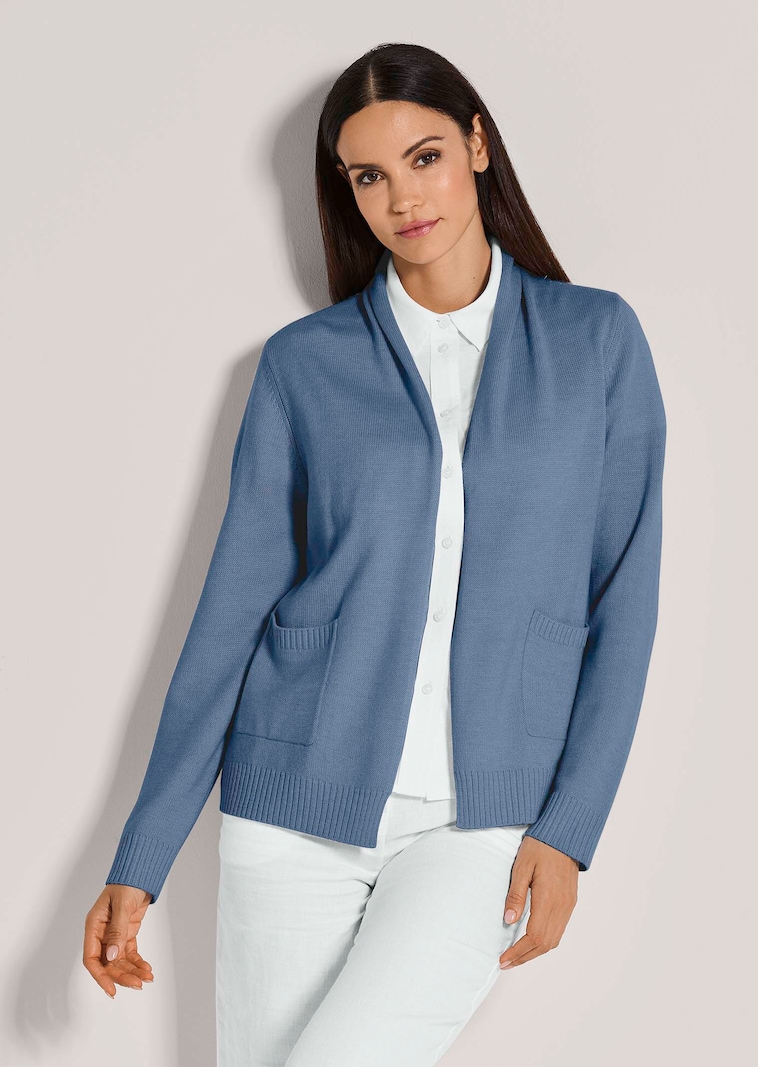
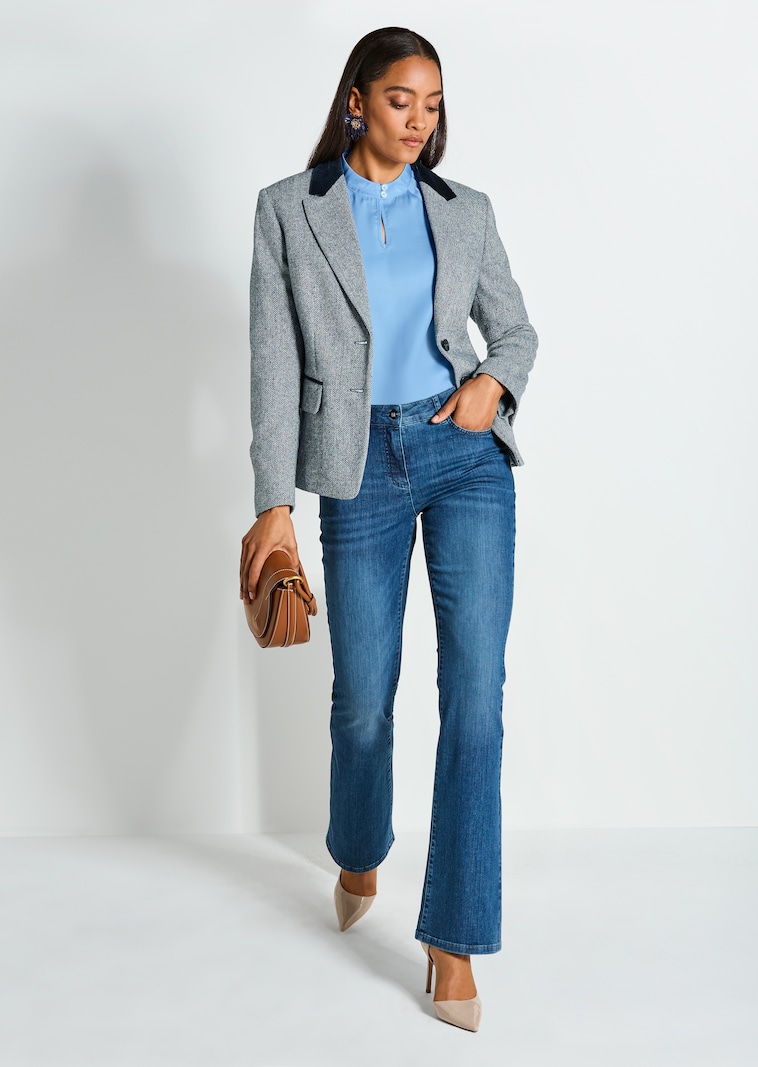
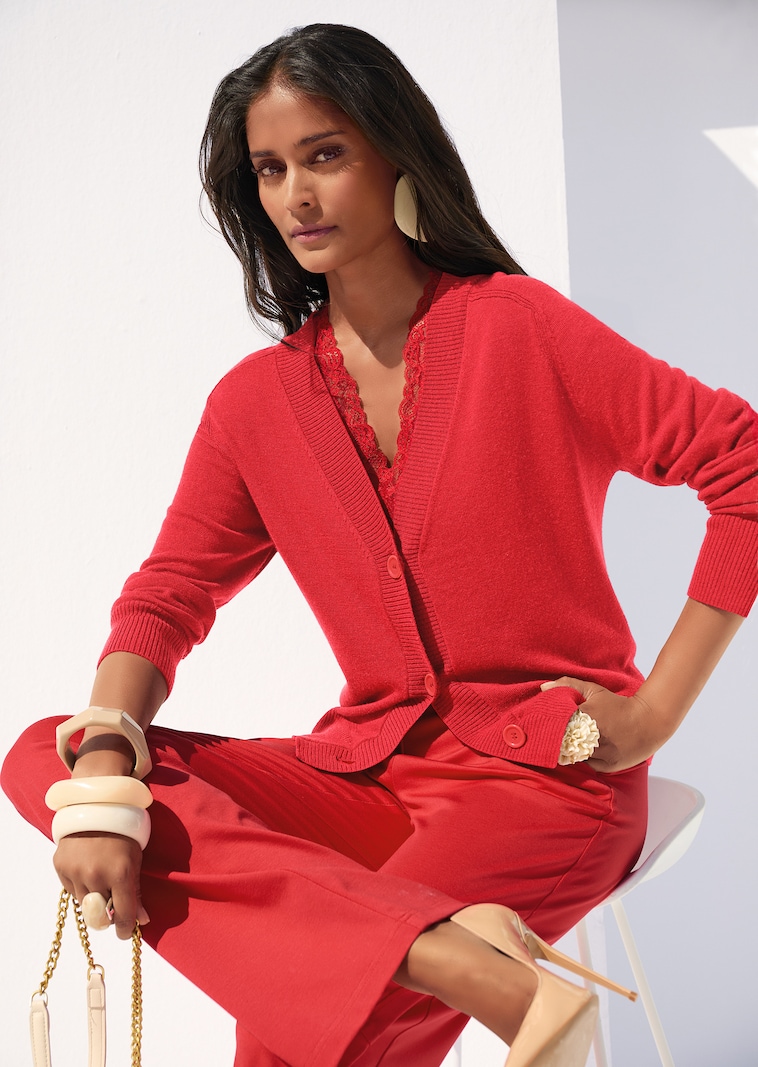
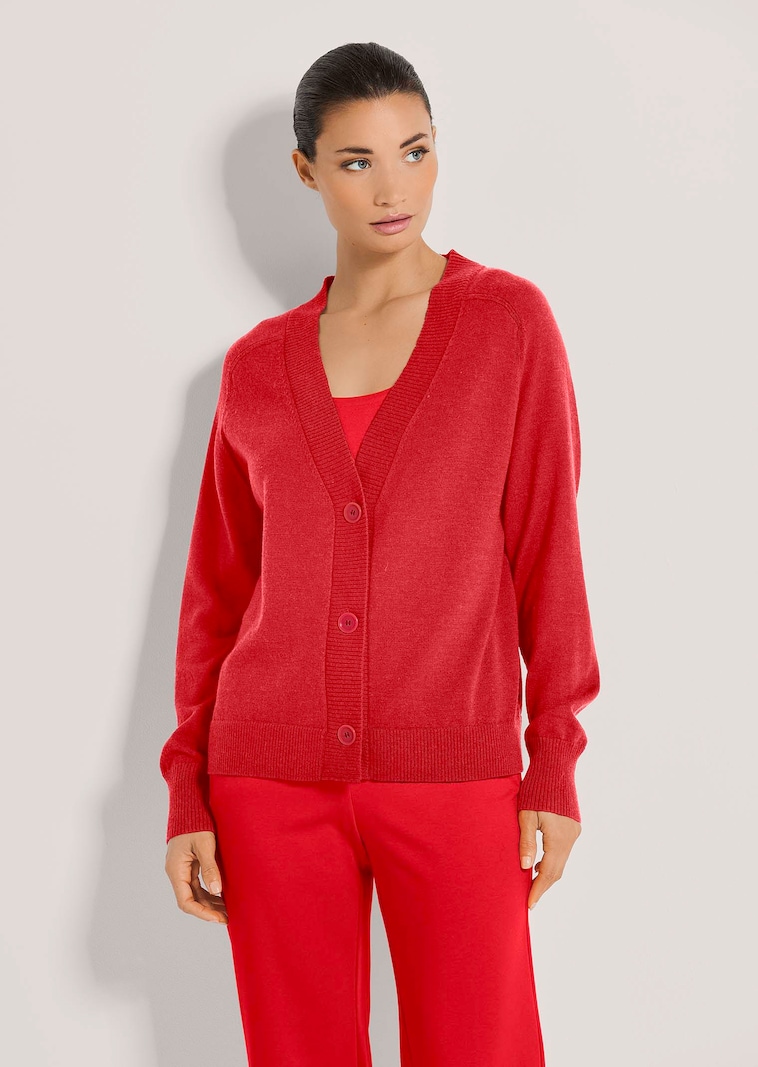
Silk is often blended with other fibres, and for good reason. Even a small percentage of silk noticeably elevates a fabric: it makes it softer, adds sheen and significantly enhances comfort. A silk top blended with cotton, for example, is the perfect layering piece beneath a blazer – lightweight yet refined. At MADELEINE, you will also find knitwear crafted from luxurious blends of virgin wool, silk and cashmere – combinations that feel warm, soft and beautifully lightweight. In these blends, silk acts as a quiet luxury enhancer that simply makes everything feel a little more special.
Caring for silk properly – washing, ironing and more
Silk is delicate – but it is not difficult to care for. Follow a few simple rules and you will enjoy your favourite pieces for many years.
Washing – always check the care label first: the most important rule is to follow the care instructions on the label exactly. It is also advisable to use a laundry bag and a detergent specially designed for silk.
Which detergent should be used for silk? Because silk is a protein fibre, regular detergents can damage its structure. Always use a dedicated silk detergent without enzymes, bleach or fabric softener.
Removing stains from silk: never treat individual stains – including perspiration marks – with water alone, as this may leave rings. Instead, wash the entire garment. For stubborn stains, professional cleaning is recommended.
Drying: never tumble dry silk. It is best dried flat on a clean towel or hanging naturally away from direct sunlight.
Ironing silk: silk should ideally be ironed slightly damp, inside out and at a low temperature. Even gentler: use a steamer. Never iron directly onto the shiny side, as this may damage the fibres.
Storage: silk prefers cool, dry and light-protected conditions. Ideally, store garments hanging up, as sharp creases can weaken delicate fibres over time.
Does silk crease? Yes – slightly, and that is part of its charm. Light creases appear quickly but disappear just as easily: simply hang the garment up or steam it briefly. A little creasing in silk never looks untidy – rather effortlessly elegant.
Styling silk fashion – from blouses to occasion dresses
Silk naturally attracts attention and should therefore be styled thoughtfully.
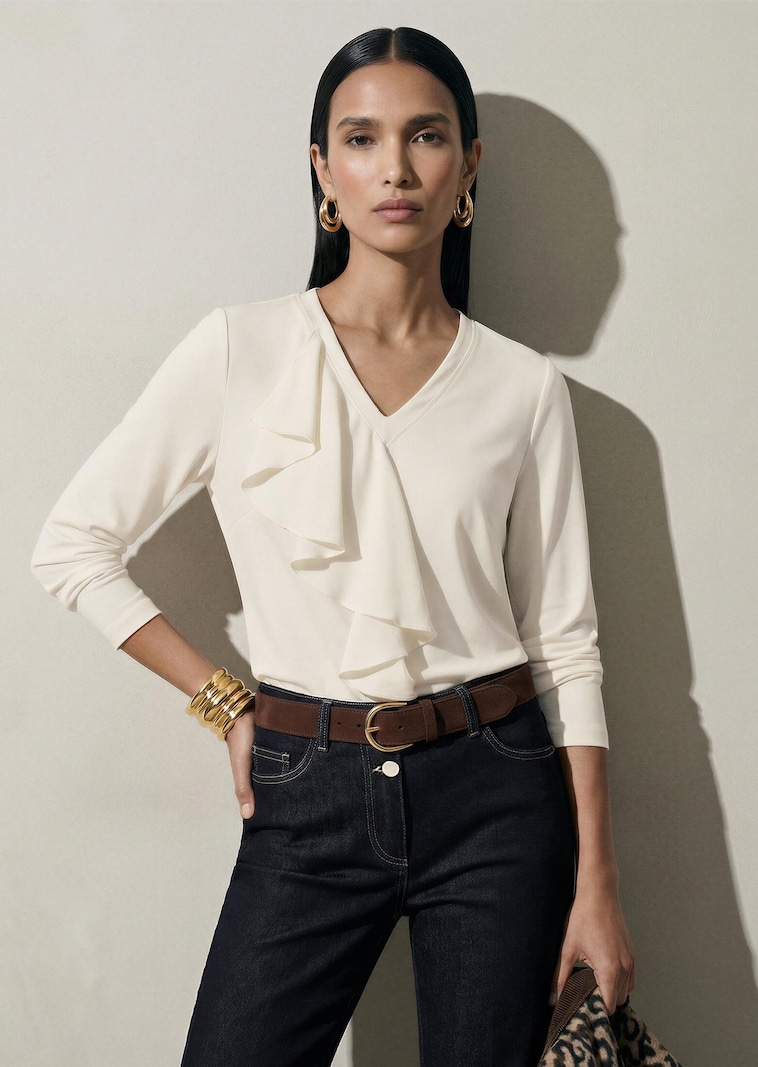
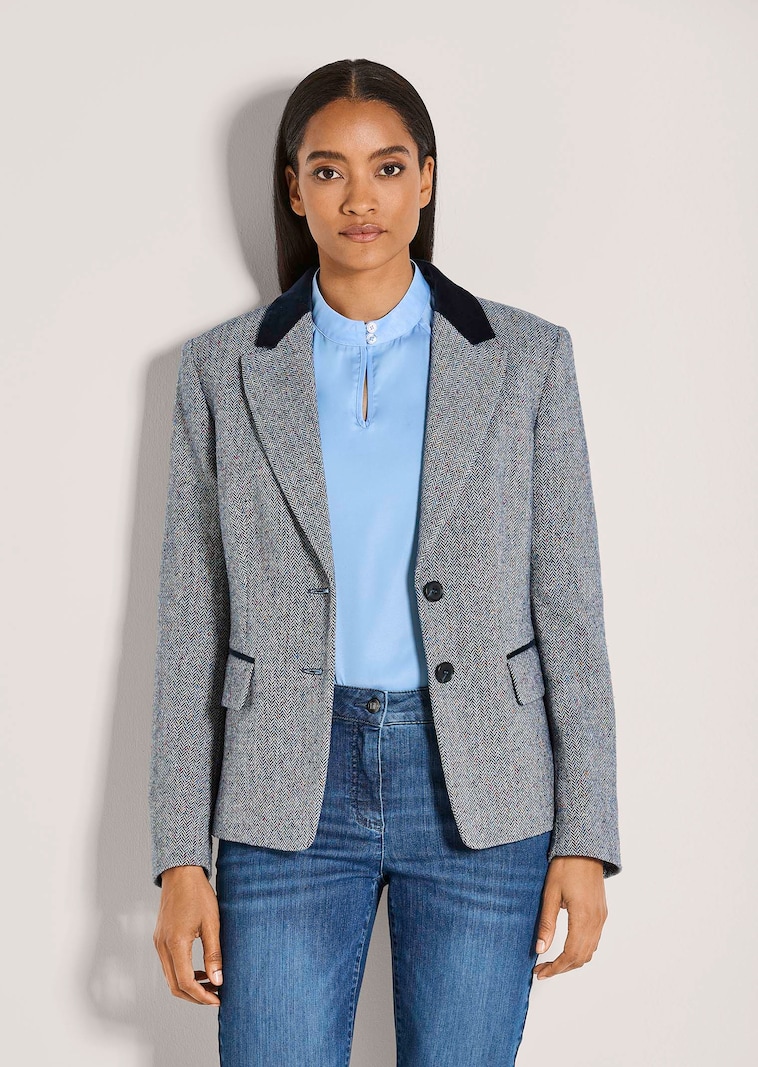
Play with contrasts: silk thrives on contrast. A flowing silk blouse or silk shirt blouse paired with textured fabrics such as a denim jacket, substantial knitwear or a blazer creates visual interest through the contrast between soft and textured, glossy and matte.
Keep the styling understated: silk does not need competition. A silk occasion dress, or a silk tunic styled with relaxed trousers, works best when silk remains the highlight and the rest of the look stays refined and understated.
Fashion in silk – because some things deserve to feel special
Silk is more than a fabric. It is a promise of quality, beauty and a luxurious wearing experience that makes every day feel a little more special. With the right care, silk accompanies you for many years without ever losing its magic.